Why are wooden educational toys becoming popular in China? The question reflects a visible change in family life, classrooms, and consumer values. In Shanghai, Shenzhen, and smaller cities, parents increasingly choose toys that encourage touching, building, sorting, and problem-solving. A wooden balance board, puzzle, or counting set can turn a living-room floor into a small learning space. The toy feels simple, but the child’s actions are complex.
Maria Montessori, the physician and education pioneer, wrote, “The hands are the instruments of man’s intelligence.” Her words help explain this growing interest. Wooden toys often invite children to use both hands and imagination, rather than follow flashing screens or fixed electronic instructions. Many Chinese parents also appreciate their natural appearance, reusable design, and connection with low-waste lifestyles. Teachers notice another benefit: open-ended materials can support group play and patient concentration.
Still, the trend deserves careful examination. Not every wooden toy is educational. Some products use vague claims, poor finishes, or designs unsuitable for young children. Safety testing, smooth edges, durable construction, and age guidance matter more than attractive packaging. Price is another weakness. High-quality wood can make these toys less accessible to ordinary families. The appeal is real, but it is not automatically fair or sustainable. This article explores why are wooden educational toys becoming popular in China, while examining parental expectations, education trends, product quality, and the limits behind the enthusiasm. The answer may be practical, cultural, and emotional at once.
What Are Wooden Educational Toys?
Why Are Wooden Educational Toys Becoming Popular in China?
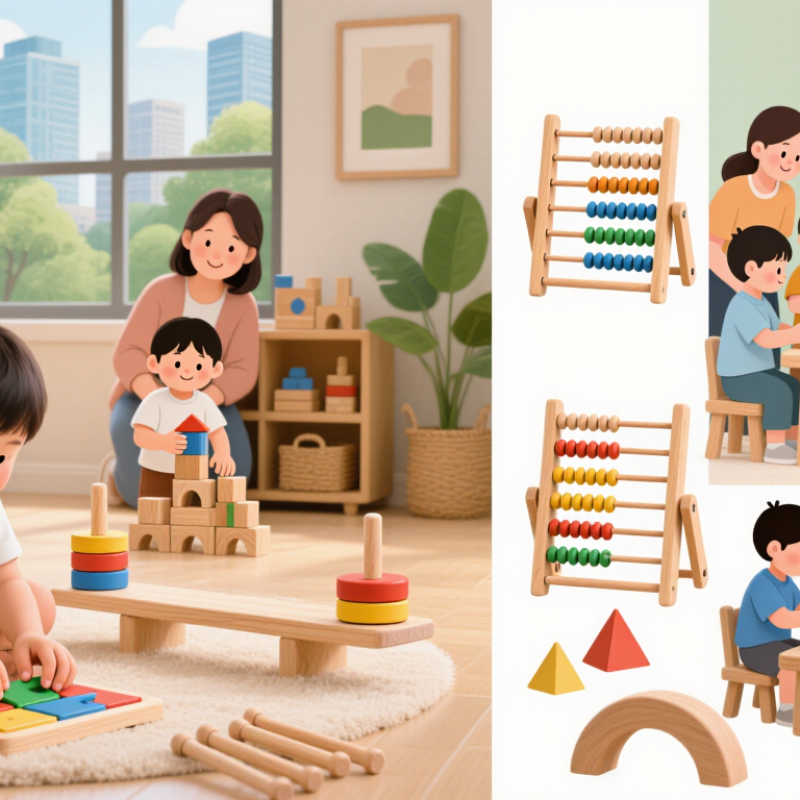
Wooden educational toys are play materials made mainly from wood, designed to support learning through hands-on activity. Blocks, stacking rings, puzzles, counting boards, and shape sorters are common examples. They turn abstract ideas into physical experiences. A child can feel balance, compare sizes, and test cause and effect without a screen.
Not every wooden toy is educational. The label can be overstated. A toy becomes meaningful when its design encourages problem-solving, language, movement, or social play. The American Academy of Pediatrics has emphasized that simple toys can support caregiver-child interaction and imaginative play. This matters in Chinese homes, where parents increasingly examine developmental value, materials, and durability before buying. Grand View Research estimated the global wooden toys market at about USD 4.4 billion in 2023, with continued growth expected through 2030.
Safety still comes first. Responsible makers should consider smooth surfaces, secure parts, age suitability, and recognized standards such as China’s GB 6675, EN 71, or ASTM F963. Natural wood does not automatically mean safer. Paint, glue, and small components require careful testing. In real use, a plain wooden puzzle may create richer conversation than a complicated toy with flashing lights. Yet results vary by child, adult guidance, and design quality. That uncertainty deserves more attention.
How the Wooden Toy Market Is Growing in China
Why Are Wooden Educational Toys Becoming Popular in China?
How the Wooden Toy Market Is Growing in China
China’s wooden toy market is expanding as parents seek quieter, longer-lasting learning products. In retail stores and online listings, wooden puzzles, counting boards, and balance games appear more often. The change is visible. Their simple shapes fit homes, classrooms, and early education centers.
Several forces support this growth. Many families now value play that builds coordination, language, and problem-solving skills. Wooden toys also offer a screen-free activity for younger children. Rising household incomes help, but price still matters. Parents often compare material quality, age suitability, and safety testing before buying. Reliable sellers should provide clear instructions and traceable product information.
Local manufacturers are improving design, packaging, and production efficiency. Some products now reflect Chinese festivals, animals, and everyday objects. This cultural detail can make learning feel more familiar. However, the market is not automatically sustainable. Poorly finished edges, weak paint, or exaggerated educational claims can damage trust. I have noticed that attractive design sometimes receives more attention than practical durability. That is a weakness worth examining. Market growth will depend on safer materials, honest communication, and better evidence about how children actually use these toys. Feedback from parents, teachers, and child-development professionals can guide that improvement.
Why Are Wooden Educational Toys Becoming Popular in China? - How the Wooden Toy Market Is Growing in China
| Market Dimension |
2019 |
2020 |
2021 |
2022 |
2023 |
2024 |
What It Means for Wooden Educational Toys |
| Births in China |
14.65 million |
12.00 million |
10.62 million |
9.56 million |
9.02 million |
9.54 million |
A smaller child population increases the importance of product quality, educational value, safety, and premium positioning rather than relying only on volume sales. |
| Urban population share |
60.60% |
63.89% |
64.72% |
65.22% |
66.16% |
67.00% |
Urban families generally have stronger access to early-learning services, specialty retail, and online shopping, supporting demand for educational toys. |
| National per-capita disposable income |
¥30,733 |
¥32,189 |
¥35,128 |
¥36,883 |
¥39,218 |
¥41,314 |
Rising household income can support spending on durable, reusable toys with perceived learning and developmental benefits. |
| Online retail sales of physical goods |
¥8.52 trillion |
¥9.76 trillion |
¥10.80 trillion |
¥11.96 trillion |
¥13.02 trillion |
¥13.08 trillion |
The expansion of online retail makes it easier for parents to compare materials, safety information, age suitability, and educational functions before purchasing. |
| Product characteristics valued by parents |
Observed consumer preference indicators |
Wooden educational toys are well suited to preferences for tactile play, open-ended creativity, screen-free activities, durability, and simple product designs. |
| Regulatory and safety expectations |
Safety, labeling, material, and age-grade compliance |
Compliance with applicable Chinese toy safety requirements, including GB 6675 standards where relevant, is increasingly important for consumer trust and retail access. |
Data note: China does not publish a separate official annual statistical series for the wooden educational toy segment. The table therefore combines official macro-level indicators with market-relevant consumer and regulatory dimensions rather than presenting an unsupported standalone wooden-toy market size.
Sources: National Bureau of Statistics of China, annual national economic and social development communiqués, 2019–2024; National Bureau of Statistics of China, national income and consumption data; China Internet Network Information Center and official online retail statistics; applicable Chinese toy safety standards.
Why Chinese Families Prefer Wooden Learning Toys
In many Chinese homes, wooden learning toys are becoming more than playroom objects. They support quiet, hands-on learning. Chinese families often prefer them because children can touch, move, sort, and rebuild the same pieces. A wooden puzzle may introduce shapes, patience, and early problem-solving. Building blocks can also encourage simple conversations between parents and children.
The material feels warm and substantial. It does not flash, beep, or compete loudly for attention. That quality matters in busy apartments, where families may want calmer indoor activities. Many parents also value durability. A well-made toy can survive repeated use, storage, and younger siblings. Its surface shows small marks over time. Those marks can record real play.
Safety still requires careful judgment. Parents should check age guidance, smooth edges, secure parts, and clear material information. Wood alone does not guarantee quality. A poorly finished toy may splinter, and a complex toy may frustrate a young child. Early-childhood educators commonly recommend choosing toys that match a child’s current ability, with room for growth. I partly agree, but children sometimes learn most from manageable difficulty. A child struggling to balance six blocks may need time, not correction. That moment can look untidy. It can also build persistence. Some wooden toys cost more than plastic alternatives, which creates a real concern for families. Preference is not always affordability. Families often weigh longevity, learning value, safety, and whether the toy will still feel useful months later.
Educational, Safety, and Environmental Benefits
In many Chinese homes and classrooms, wooden educational toys are moving from nursery shelves into everyday learning. Their appeal is practical, not merely nostalgic. A wooden counting board lets children touch, sort, and rearrange pieces while practicing early mathematics. Puzzles also strengthen spatial reasoning and patience. Teachers often value open-ended materials because one set can support several activities. A child may build a bridge today and a pretend shop tomorrow. That flexibility encourages language, cooperation, and problem-solving.
Safety remains a major reason for this interest. Solid wood usually feels stable in small hands and does not depend on batteries or complicated electronic parts. Yet “natural” does not automatically mean safe. Responsible producers should control splinters, sharp edges, loose pieces, coatings, and small-part risks. Parents should check age guidance, surface condition, and construction regularly. A toy used by a two-year-old needs different safeguards from one used by an eight-year-old. Independent testing and clear material information make purchasing decisions more reliable. Still, labels can be misunderstood, so adult supervision matters.
Environmental benefits also influence Chinese families who are thinking beyond one purchase. Durable toys can survive repeated play, be shared between siblings, and reduce frequent replacement. Wood from responsibly managed sources may lower pressure on forests, but sourcing claims require evidence. Paints, adhesives, packaging, and transport also affect a product’s footprint. This is where enthusiasm needs some humility. Wooden toys are not automatically greener than every plastic alternative. Their real value depends on long use, repairability, safe materials, and thoughtful disposal. That qualification matters. The best choice is often the toy that remains useful, safe, and engaging after the first excitement fades.
Why Are Wooden Educational Toys Becoming Popular in China?
Educational, safety, and environmental benefits in context
Educational value
Wooden toys commonly support hands-on play, spatial reasoning, fine-motor practice, and open-ended problem solving.
Safety value
Simple wooden designs can reduce unnecessary electronic components and encourage parents to check age suitability, coatings, small parts, and compliance labels.
Environmental value
China’s forest coverage has increased substantially since 2000. Responsibly sourced, durable wood can support reuse and reduce dependence on short-lived plastic products.
Chart data: China’s forest coverage rate, based on national forest inventory figures reported by China’s National Forestry and Grassland Administration. Forest coverage is an environmental context indicator, not a direct measure of toy sales.
Challenges Facing Wooden Toy Manufacturers in China
Wooden educational toys are gaining attention in China, but manufacturing them remains demanding. Producers face rising costs for certified timber, safer paints, skilled carving, and careful assembly. A small splinter can damage a child’s hand and a factory’s reputation. Quality control must cover wood moisture, edge smoothness, paint adhesion, and loose parts.
Compliance adds another layer of pressure. Manufacturers selling in China need to follow applicable national toy safety requirements, including GB 6675, while exporters may face EN 71 or ASTM F963 requirements. Rules can change, and testing is not a one-time task. Each batch may need traceable material records, laboratory reports, and production checks. That sounds simple. It is not.
Supply chains also create practical problems. Beech, rubberwood, and pine can vary in hardness, color, and grain. Humid summers may cause pieces to swell, while dry warehouse air can create small gaps. Factories must manage both conditions. Labor training is another challenge, especially when workers inspect tiny pegs or assemble multi-part puzzles. Automation helps with cutting, but it cannot replace every careful visual check. Manufacturers also compete with inexpensive plastic alternatives and must explain why durability, repairability, and tactile learning justify a higher price. Some producers still overpromise sustainability without measuring waste or transport emissions. That weakness deserves more honest reporting.
Conclusion
Wooden educational toys are playthings made primarily from natural wood and designed to support children’s learning through hands-on activities. They may help develop creativity, problem-solving, fine motor skills, coordination, and early understanding of numbers, shapes, and language. In recent years, China’s wooden toy market has grown as parents increasingly seek meaningful alternatives to purely electronic entertainment. Rising interest in early education, improved household spending, and the development of online retail have also expanded access to these products.
The question “why are wooden educational toys becoming popular” can be answered through their educational value, durability, safety appeal, and environmental advantages. Many Chinese families appreciate toys that encourage independent play, use simple designs, and reduce dependence on screens. However, manufacturers still face challenges, including production costs, quality consistency, safety testing, sustainable material sourcing, and competition from plastic or digital toys. Continued innovation and responsible manufacturing will be important for the market’s long-term development.

 Ebid Toy