Why Are Educational Toys Designed and Manufactured?

Time:2026-09-10 Author:Ethan
0%

Why Are Educational Toys Designed and Manufactured?

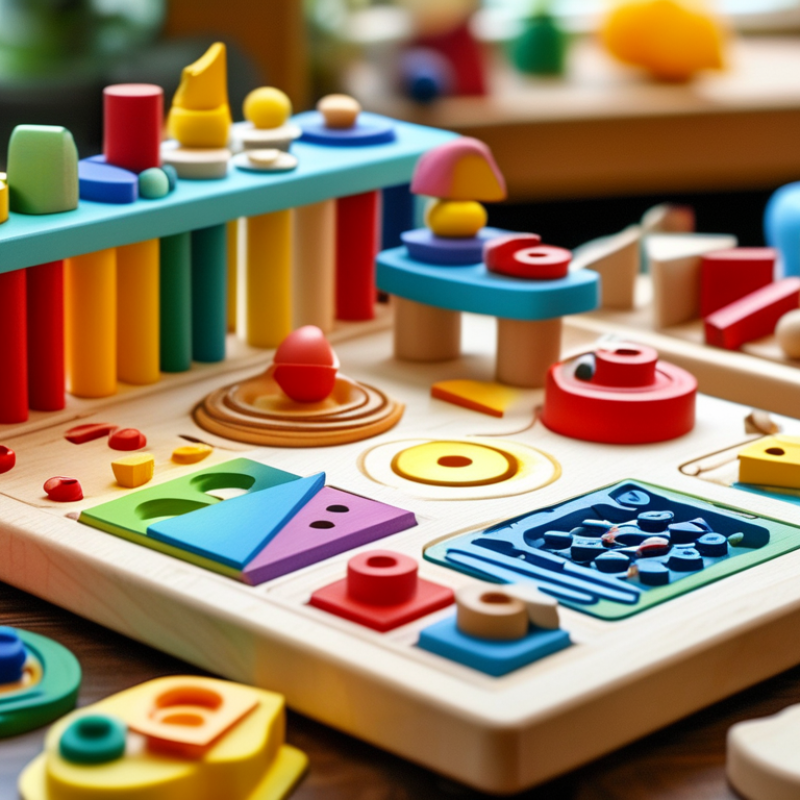
Educational toys are created to turn learning goals into hands-on experiences. They help children explore numbers, language, movement, memory, and social interaction. A wooden sorting board, for example, may use different shapes, colors, and textures to make early mathematics visible. The toy should invite action, not simply display information.

So, how are educational toys designed and manufactured? Designers usually begin with a child’s developmental needs and a clear learning purpose. They study classroom behavior, consult teachers, and consider feedback from parents. Educational expert Maria Montessori wrote, “The hands are the instruments of man’s intelligence.” Her observation still influences tactile toy design today. Children learn through touching, moving, testing, and repeating.

Manufacturing adds another layer of responsibility. Teams select durable materials, create prototypes, test small parts, and inspect edges, hinges, sounds, and paint surfaces. They also assess whether instructions are understandable for both children and caregivers. A toy may look attractive but fail if it breaks quickly or offers little meaningful play. The process is not flawless. Some designs may be too difficult, too noisy, or too focused on adult expectations. That weakness deserves honest review.

Reliable companies revise products after observing real children use them. They balance educational value, accessibility, durability, cost, and age-appropriate safety. The best results feel simple, but they are rarely simple to produce. Behind one colorful puzzle are many decisions about development, materials, testing, and responsible manufacturing. This article examines why those decisions matter and how they shape better learning experiences.
Why Are Educational Toys Designed and Manufactured?

Defining Educational Toys Through Learning Science and 2023’s $28.6B U.S. Toy Market

Educational toys are designed to turn play into active learning. In 2023, the U.S. toy market reached about $28.6 billion, reflecting strong demand for meaningful play experiences. Families increasingly look for toys that support language, problem-solving, movement, or social skills. Learning science suggests that children learn better when they make choices, test ideas, and receive clear feedback. Hands-on discovery matters.

A well-designed toy gives children a manageable challenge. For example, a building set may strengthen spatial reasoning through balancing blocks and comparing shapes. A storytelling game can expand vocabulary when children invent characters and explain their decisions. From classroom observation, I have noticed that open-ended toys often encourage longer engagement than toys with one correct action. Still, engagement varies widely. A toy that works beautifully for one child may frustrate another.

Manufacturers also use child-development research, safety testing, and age-appropriate materials during production. Reliable design requires more than bright colors or educational claims. It requires evidence, careful observation, and feedback from educators and caregivers. The $28.6 billion market creates opportunity, but it can also reward exaggerated promises. Some products may look intelligent without supporting meaningful learning. That weakness deserves more attention. Educational value should remain visible in the child’s actions: asking questions, adjusting strategies, communicating, and trying again. Good toys do not replace teaching. They create useful moments for it.

Designing Toys to Build Cognitive, Social, Motor, and STEM Skills

Educational toys are designed to make learning active, visible, and easier to practice. A child turns, stacks, sorts, measures, and tests ideas with their hands. These actions strengthen working memory and early problem-solving skills. In classroom observations, I have seen children persist longer when a puzzle gives immediate physical feedback. The result is not automatic. Some children need quieter pieces or clearer instructions. Good design respects different abilities, ages, and attention spans.

Motor development begins with simple control. Large blocks support grasping and balance, while pegs and tweezers refine finger movements. Social learning appears when two children negotiate a bridge design or share limited pieces. They practice listening, explaining, waiting, and repairing disagreements. Those moments are valuable. However, a toy can encourage competition too strongly. Designers should observe real play, not only test whether children complete a task.

STEM-focused toys connect curiosity with evidence. Children can predict which ramp makes a car travel farther, then change one variable. They may record results with marks, photos, or simple measurements. Adults should ask open questions instead of supplying every answer. Reliable products need age-appropriate materials, stable construction, and instructions tested by educators and families. I have learned that attractive design is not enough. A toy may look educational yet offer little challenge after one use. That weakness deserves honest review and redesign.

Why Are Educational Toys Designed and Manufactured? - Designing Toys to Build Cognitive, Social, Motor, and STEM Skills

An evidence-informed overview of how educational toys support development through purposeful design, active play, and age-appropriate challenges.

Educational toys are most effective when children actively explore, make choices, receive feedback, and use the toy in ways that match their developmental level.
Developmental Dimension Primary Design Goal Common Toy Features Typical Age Focus Skills Supported Observable Learning Outcome
Cognitive Skills Encourage children to think, remember, compare, plan, and solve problems. Matching activities, sorting pieces, memory games, pattern cards, puzzles, and graduated challenges. 3–8 years Attention, working memory, classification, sequencing, spatial reasoning, flexible thinking, and early problem-solving. The child identifies relationships, tests possible solutions, corrects mistakes, and explains a simple strategy.
Language and Literacy Build vocabulary, communication, listening, storytelling, and early print awareness. Story cards, picture prompts, role-play sets, alphabet manipulatives, rhyming games, and conversation-based activities. 2–7 years Vocabulary, phonological awareness, narrative structure, turn-taking in conversation, and recognition of letters or symbols. The child names objects, follows directions, retells events, creates stories, or connects sounds with written symbols.
Social Skills Provide structured opportunities for cooperation, communication, negotiation, and empathy. Cooperative games, pretend-play scenarios, shared building tasks, role cards, and activities with multiple participants. 3–10 years Sharing, turn-taking, joint decision-making, emotional understanding, perspective-taking, and conflict resolution. Children wait for turns, communicate intentions, follow shared rules, respond to another person’s ideas, and collaborate toward a goal.
Emotional Development Help children recognize feelings, practice self-regulation, and experience manageable challenge. Emotion cards, puppets, open-ended role play, calming sensory materials, and games with predictable rules and feedback. 2–8 years Emotional vocabulary, impulse control, persistence, frustration tolerance, self-expression, and confidence. The child identifies an emotion, uses words to express a need, tries again after an unsuccessful attempt, or chooses a calming strategy.
Fine Motor Skills Strengthen controlled hand and finger movements needed for everyday tasks and later writing. Pegs, beads, lacing cards, interlocking parts, tweezers, construction pieces, drawing tools, and manipulatives of varied sizes. 2–7 years Hand-eye coordination, grasp control, bilateral coordination, finger strength, precision, and visual-motor integration. The child picks up, rotates, connects, places, threads, or draws with increasing accuracy and control.
Gross Motor Skills Promote body control, balance, coordination, movement planning, and physical confidence. Balance elements, movement cards, target games, construction for active play, obstacle components, and rhythm activities. 3–10 years Balance, locomotor movement, bilateral coordination, body awareness, timing, and motor planning. The child changes direction, maintains balance, coordinates movements, follows a movement sequence, or adjusts force and speed.
Early Mathematics Make numerical and spatial ideas visible through hands-on manipulation. Counting objects, number lines, shape sorters, measuring tools, balance scales, pattern blocks, and simple board games. 3–8 years Counting, one-to-one correspondence, quantity comparison, geometry, patterns, measurement, and basic operations. The child counts objects accurately, compares more and less, identifies shapes, extends patterns, or measures using a consistent unit.
Science Skills Encourage observation, questioning, prediction, testing, and evidence-based explanation. Magnifiers, sorting trays, balance tools, nature observation kits, water-play materials, and cause-and-effect experiments. 4–10 years Observation, classification, prediction, comparison, data recording, causal reasoning, and use of descriptive language. The child asks a question, predicts an outcome, changes one condition, observes what happens, and describes the result.
Technology and Engineering Develop design thinking through building, testing, improving, and explaining solutions. Modular construction parts, gears, ramps, connectors, simple circuits, programmable components, and design challenge cards. 5–12 years Systems thinking, sequencing, structural reasoning, debugging, iterative design, cause-and-effect reasoning, and collaboration. The child defines a goal, creates a model, tests its performance, identifies a weakness, and modifies the design.
Creativity Support original ideas, imagination, experimentation, and multiple possible solutions. Open-ended blocks, loose parts, art materials, transformable objects, blank templates, and prompts without one required answer. 2–12 years Divergent thinking, symbolic representation, imagination, experimentation, originality, and creative decision-making. The child uses materials in different ways, generates several ideas, combines features, or explains an original creation.
Executive Function Practice planning, attention control, working memory, and adapting to changing rules or goals. Multi-step challenges, strategy games, sequencing tasks, rule-switching games, timers, and activities requiring delayed responses. 4–12 years Inhibitory control, sustained attention, planning, organization, working memory, and cognitive flexibility. The child remembers instructions, waits before acting, completes steps in order, changes strategy, or stays focused on a task.
Independent Learning Give children appropriate control over pace, difficulty, choices, and repetition. Self-correcting materials, clear visual instructions, adjustable difficulty, repeatable tasks, and accessible storage. 3–10 years Self-direction, motivation, persistence, self-assessment, decision-making, and responsibility for materials. The child chooses a task, begins with limited assistance, checks progress, repeats practice, and asks for help when needed.
Safety and Accessibility Ensure that learning opportunities are physically safe, understandable, inclusive, and usable by diverse children. Rounded edges, secure parts, non-toxic materials, readable instructions, varied sensory options, high-contrast elements, and adaptable components. All ages Safe exploration, independent access, sensory participation, visual discrimination, and inclusion in shared play. The child can handle the materials safely, understand the activity, participate with appropriate adaptations, and remain engaged.

Using ASTM F963, EN 71, and ISO 8124 to Govern Toy Safety

Why Are Educational Toys Designed and Manufactured?

Educational toys are designed to turn learning into safe, repeatable action. A child may stack blocks, press a button, or sort colored pieces. Each movement tests size, strength, sound, and age suitability. Safety is not an afterthought. It shapes the design from the first sketch.

ASTM F963, EN 71, and ISO 8124 provide different but connected safety frameworks. ASTM F963 supports mandatory toy requirements in the United States. EN 71 guides compliance for toys placed on the European market. ISO 8124 offers an international reference for mechanical, physical, flammability, and chemical risks. Typical checks examine small parts, sharp edges, accessible batteries, noise levels, and the migration of certain elements. A compliance team may measure a 3-year-old’s reach with a probe, then test a toy after repeated drops.

The data remains uncomfortable. The U.S. Consumer Product Safety Commission reported an estimated 231,700 toy-related emergency-department injuries involving children under 15 in 2023. The European Commission’s 2023 Safety Gate report also identified toys among its most frequently notified product categories, representing about 13% of alerts. These figures show why testing must reflect real homes, not only laboratories. However, standards cannot predict every misuse. A toy may pass formal testing yet confuse caregivers through unclear instructions. That weakness deserves review. Safety labels should be readable, age guidance should be realistic, and production controls should verify every material change.

Balancing Child Development, Accessibility, Cost, and Sustainable Materials

Educational toys are designed to support learning through active, meaningful play. A child may sort wooden shapes, match colors, or build a small bridge. These actions can strengthen coordination, language, problem-solving, and patience. In practice, development depends on the child’s age, interests, and surroundings. One design rarely suits every learner.

Accessibility must guide both design and manufacturing. Large handles can help children with limited motor control. Raised symbols and strong color contrast support children with visual differences. Simple instructions also help families with different language backgrounds. However, adding every feature can increase production costs. A useful toy should remain affordable, not become a luxury item. This balance is difficult.

Material choices matter beyond appearance. Durable wood, recycled cardboard, and responsibly sourced fibers may reduce waste when selected carefully. Water-based finishes can be preferable, but safety testing and surface durability still require attention. A toy that breaks after three uses is not truly sustainable. Manufacturers should measure material origin, production waste, packaging, and product lifespan. They should also test small parts, edges, fasteners, and cleaning resistance under realistic conditions.

Children and teachers often reveal problems that laboratory testing misses. A puzzle may be educational but frustrating because its pieces are too tight. A textured surface may help one child and overwhelm another. Designers need feedback from diverse families, not assumptions. Some compromises will remain. That is honest. Better products emerge when teams record failures, revise prototypes, and explain their material and safety decisions clearly.

Scaling Prototypes into Manufacturing Through Testing, Data, and Quality Control

Educational toys are designed to turn curiosity into active learning. They should invite children to touch, build, compare, and try again. A successful prototype may use colorful parts, clear movement, and simple challenges. However, a prototype is only an idea made visible. It still needs evidence before reaching children.

Scaling that idea requires structured testing. Designers observe how children grip pieces, follow instructions, and respond to frustration. They record breakage, loose parts, sharp edges, and repeated misuse. Small details matter. A hinge may pinch fingers. A printed symbol may confuse younger users. Data from these sessions helps teams adjust dimensions, materials, instructions, and difficulty levels. Our first assumptions are often incomplete. Children do not always play as adults expect.

Manufacturing adds another layer of control. Samples from different production runs should be checked for size, color, weight, surface finish, and component strength. Drop tests and repeated-use tests can reveal weaknesses that visual inspections miss. Factories also need clear inspection standards, calibrated tools, and traceable records. A simple checklist is useful, but it is not enough by itself. Human judgment still matters. When defects appear, teams should investigate the process, not merely remove one faulty item. This approach supports consistent quality and helps educational toys remain engaging, durable, and dependable at scale.

Why Are Educational Toys Designed and Manufactured?

Scaling prototypes into manufacturing requires repeated safety testing, measurable specifications, and production quality control. The chart shows selected U.S. toy-safety chemical limits used to evaluate materials, coatings, and finished products.

Reference values: 90 ppm for lead in surface coatings under 16 CFR 1303, 100 ppm for lead content in accessible substrates under CPSIA, and 0.1% (1,000 ppm) for restricted phthalates in accessible plasticized components.

FAQS

: How can educational toys support child development?

: Sorting shapes, matching colors, and building bridges encourage coordination and problem-solving. These activities may also strengthen language, patience, and persistence. Results vary. A toy cannot suit every learner.

Which accessibility features can help children?

Large handles may support children with limited motor control. Raised symbols and strong color contrast can assist children with visual differences. Simple instructions help families using different languages. More features may raise costs.

How can manufacturers keep accessible toys affordable?

Teams should prioritize features that solve clear user needs. They can test prototypes with diverse families before adding expensive changes. A useful toy should remain affordable. That balance is difficult.

Which materials may support more sustainable toy design?

Durable wood, recycled cardboard, and responsibly sourced fibers may reduce waste. Water-based finishes can be preferable when safety and durability are verified. Material origin, packaging, and production waste all matter. A short lifespan changes the answer.

How can a toy be genuinely durable?

Manufacturers should test small parts, edges, fasteners, and surface cleaning resistance. Drop tests and repeated-use tests can reveal hidden weaknesses. A toy breaking after three uses is not sustainable. Visual checks alone are insufficient.

Why is children’s feedback important during toy development?

Children may grip pieces differently from adult expectations. A puzzle can teach matching while still frustrating users with tight pieces. A textured surface may comfort one child and overwhelm another. Laboratory testing misses some experiences.

What must happen before a prototype enters manufacturing?

Designers should observe play, record failures, and revise dimensions or instructions. They need evidence about grip, frustration, breakage, and repeated misuse. The prototype is only an idea made visible. Our assumptions may be incomplete.

How can manufacturers maintain consistent quality at scale?

Samples from different production runs should be checked for size, color, weight, and strength. Factories need clear standards, calibrated tools, and traceable records. Checklists help, but they are not enough. Human judgment still matters.

Conclusion

Educational toys are designed and manufactured to turn play into meaningful learning experiences. The process begins with learning science and an understanding of children’s developmental needs, including cognitive growth, social interaction, motor coordination, creativity, and early STEM skills. In the context of the U.S. toy market, valued at approximately $28.6 billion in 2023, designers must create products that are engaging, age-appropriate, accessible, affordable, and durable. The key question, “how are educational toys designed and manufactured,” involves combining educational goals with safe, enjoyable, and practical play features.

Manufacturers develop prototypes, test them with users, collect performance data, and refine the design before large-scale production. Safety requirements, including ASTM F963, EN 71, and ISO 8124, guide material selection, structural design, labeling, and quality control. At the same time, companies consider sustainable materials, efficient production, and long-term product reliability. Through careful testing and continuous improvement, educational toys can support children’s development while meeting safety, cost, accessibility, and environmental expectations.

Ethan

Ethan

Ethan is a seasoned marketing professional with a deep expertise in our company's innovative product line. With a passion for sharing knowledge and insights, he takes the lead in regularly updating our corporate blog, where he explores industry trends, product features, and effective marketing......