7 Tips to Customize Educational Toys for Your Brand?

Time:2026-10-20 Author:Madeline
0%

Customizing educational toys for a brand requires more than adding a logo or changing the package color. It begins with understanding children, caregivers, teachers, and the learning goals behind each product. A wooden counting set may need larger pieces for small hands, brighter contrast for visibility, and clear instructions for classroom use. Small details matter.

Maria Montessori, whose work strongly influenced educational toy design, said, “The hands are the instruments of man’s intelligence.” Her observation remains valuable today. Effective customization should invite children to touch, sort, build, compare, and solve problems independently. Therefore, brands should connect visual identity with meaningful play, not decoration alone. The best designs feel recognizable, useful, and easy to remember.

This guide explores how to customize educational toys for your brand through seven practical considerations. These include audience research, age-appropriate learning features, material selection, packaging, safety planning, prototype testing, and consistent storytelling. Experienced product teams should test early versions with real children and educators. Watch their hands. Listen to their questions. Notice where they hesitate.

Some choices will fail.

That is normal.

A color that looks attractive online may distract children during play. A clever mechanism may be difficult for smaller fingers. Even experienced teams can overlook these issues. Reliable customization depends on documented testing, honest feedback, and responsible product claims. It also requires respect for recognized safety requirements in every target market. When creativity meets evidence, a branded toy can become more than a promotional item. It can support learning, strengthen trust, and give children a reason to return to play.
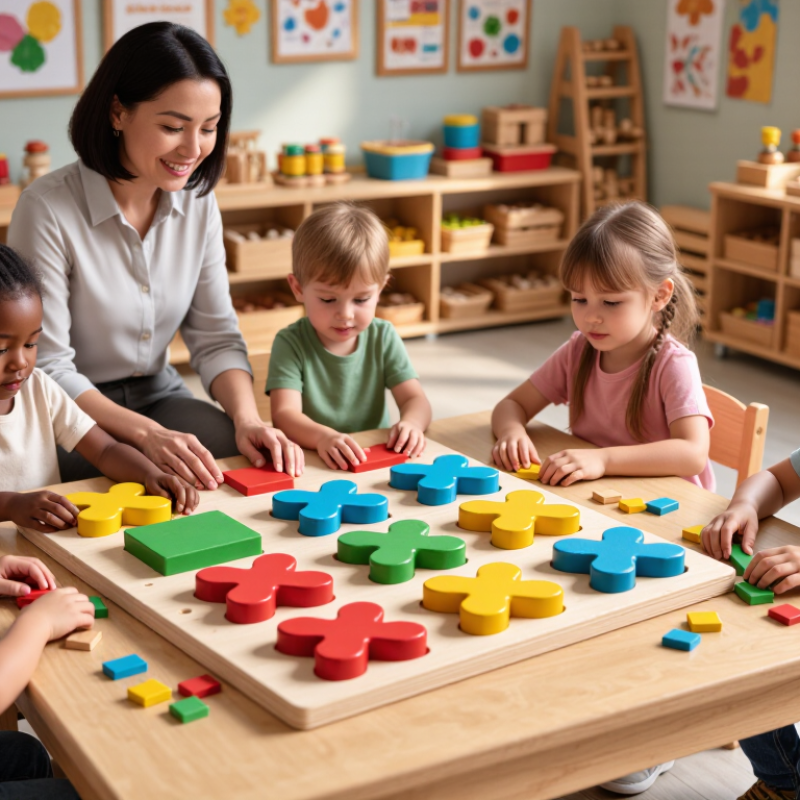
7 Tips to Customize Educational Toys for Your Brand?

Define Your Brand’s Educational Toy Goals and Target Learners

Customizing an educational toy should begin with a clear learning purpose, not colors or packaging.

Decide what children should practice: counting, fine-motor control, vocabulary, problem-solving, or social communication. Keep it measurable. For example, a sorting toy might help four-year-olds identify three shapes and match them independently. This goal guides the size of pieces, instructions, feedback, and difficulty level.

Define your target learners with practical detail. Consider age, reading ability, language background, motor skills, attention span, and learning environment. A classroom toy may need durable parts and quick reset time. A home version may require quieter play and simpler instructions.

Small hands can struggle with tight connectors. Children notice confusion. Watch real learners use an early prototype, and record where they pause, guess, or abandon the activity.

Use observations and established child-development guidance when refining the design. Test instructions with caregivers and educators, not only designers. Check whether the challenge supports learning without creating unnecessary frustration.

Our first version may have included too many steps; reducing them improved independent play. That decision was not perfect, because some advanced learners then needed extension tasks.

Build optional levels, tactile cues, and visual examples where appropriate. Document test conditions, feedback, and revisions so the final toy reflects evidence rather than assumptions.

Choose Learning Features That Match Your Brand Identity

Tip 1: Match learning features with your brand’s educational purpose. A science-focused identity may suit simple experiments, observation cards, and cause-and-effect activities. A creativity-led identity may need open-ended building pieces, drawing surfaces, or storytelling prompts. Keep the learning goal visible through the toy’s colors, language, and interaction style. During product reviews, I have found that children understand features faster when every detail supports one clear idea. Too many functions can weaken the experience.

Tip 2: Turn your visual identity into useful learning guidance. Use familiar colors, shapes, and tone across the packaging and toy interface. For example, color-coded pieces can help children sort, count, or follow sequences. However, color alone may exclude children with color-vision differences. Add symbols, textures, or printed labels. This small adjustment improves accessibility and shows responsible design thinking. It also makes instructions easier for parents to follow.

Tip 3: Customize the difficulty, not only the appearance. Offer beginner tasks, optional challenges, and clear progress signals. A child might match three shapes today, then create a pattern tomorrow. Test prototypes with children from different ages and observe their hands, pauses, and questions. Their behavior often reveals problems that surveys miss. I once assumed a quiet feature was intuitive, but several children ignored it. That mistake changed the layout. Reliable customization requires testing, documented feedback, and qualified safety review before production.

Design Safe, Age-Appropriate, and Flexible Toy Components

Customizing educational toys starts with the component, not the logo. Choose rounded edges, secure fasteners, and surfaces without sharp seams. Match every part to a clearly defined age range. A three-year-old may explore by biting, dropping, or pulling. Small detachable pieces need strict control and careful testing.

Use materials with documented chemical compliance and stable colorants. Make one component perform several learning tasks, such as sorting, counting, and tactile matching. Add flexible connectors so children can rebuild without forcing joints. Keep textures varied, but avoid loose fibers and fragile decorations.

The U.S. Consumer Product Safety Commission’s 2023 report estimated 231,000 toy-related injuries treated in emergency departments. That figure makes “almost safe” an unacceptable design target.

Build a prototype with real child behavior in mind, not ideal behavior. Test repeated drops, twisting, washing, and classroom sharing. Record failures honestly.

Label age guidance visibly, and explain supervision requirements in plain language. Let educators review the parts before production.

The European Commission’s 2023 Safety Gate report recorded 3,412 product alerts across categories, reinforcing the value of traceable checks.

One overlooked issue is cleaning: a beautiful textured piece can trap dust in deep grooves. Reconsider it. Safety tests, usability trials, and accessibility reviews should continue after launch.

Personalize Materials, Packaging, and Interactive Brand Elements

Custom educational toys should make a brand feel useful, not merely visible. These seven practical tips focus on materials, packaging, and interactive elements.

Materials and Packaging

1. Choose durable, child-safe materials with a clear tactile purpose. A textured counting tile can support sorting, counting, and fine-motor practice.

2. Match material choices with your audience. Recycled paper may suit flashcards, while sealed wood may better fit repeated classroom handling.

3. Design packaging as a learning tool. Add a fold-out maze, color-matching panel, or storage guide.

McKinsey’s 2023 global packaging survey found that consumers increasingly consider sustainability during purchases. Yet green claims need evidence. Do not print vague promises.

4. Reduce empty space. A compact box lowers material use and gives parents easier storage.

Packaging still needs strong corners and readable instructions.

Interactive Elements and Testing

5. Add interactive brand elements that support play. A short audio prompt, scannable activity guide, or progress card can extend use beyond the first session.

The 2024 PwC Voice of the Consumer Survey reported that 80% of consumers would pay more for sustainable products, on average 9.7% more. That interest does not excuse higher prices without value.

6. Personalize colors, symbols, and difficulty levels for different age groups. Keep the child’s task central.

7. Test every custom feature with real children and caregivers. Watch where they hesitate. Ask what they remember the next day.

The Toy Association’s 2024 consumer research identified educational value as a major purchase consideration for families. Still, educational claims require careful review. A beautiful package cannot repair confusing instructions or fragile components. Our practical mistake was assuming interactive features always increase engagement; sometimes, children prefer a simple tray, clear picture, and one satisfying challenge.

Test, Refine, and Scale the Customized Toy Product Line

7 Tips to Customize Educational Toys for Your Brand

Customizing an educational toy should begin with a measurable learning goal. “More engaging” is too vague. Define whether children should sort colors, practice counting, or improve fine-motor control. Grand View Research estimates the educational toys market could grow at a compound annual rate of about 10% through 2030. Demand is rising, but crowded shelves punish unclear products.

Test before you scale. Give a small group of children the prototype, then observe quietly. Can they understand the first action without adult instructions? Do they repeat the activity after five minutes? Record completion time, errors, laughter, and abandonment. Short caregiver interviews can reveal problems children cannot explain. Our early concept looked attractive, but its pieces were too small for quick handling. We also assumed brighter colors meant better attention. The test proved otherwise.

Refine one variable at a time. Change the grip, rule, sound, or packaging message, not everything together. Review the results against age-appropriate safety requirements, including applicable ASTM F963 or EN 71 testing. The Toy Association and Circana reported a 7% decline in global toy sales across tracked markets in 2023, making wasteful production harder to justify. Pilot batches reduce inventory risk. They also expose uncomfortable weaknesses. Scale only when children use the toy correctly, caregivers understand its value, and quality checks remain consistent across every production run.

FAQS

What should be considered when designing educational toy components?

Use rounded edges, secure fasteners, and smooth surfaces without sharp seams. Match every component to a clearly defined age range. Small detachable pieces require strict control and testing. Almost safe is not safe enough.

How should materials be selected for children’s toys?

Choose materials with documented chemical compliance and stable colorants. Avoid loose fibers, fragile decorations, and surfaces that break easily. Textures can vary, but deep grooves may trap dust. Reconsider beautiful but difficult-to-clean details.

How can one toy component support several learning activities?

Design one component for sorting, counting, and tactile matching. Flexible connectors can support rebuilding without forcing the joints. Children might use the parts differently than expected. That behavior matters.

What safety tests should a prototype complete?

Test repeated drops, twisting, washing, and classroom sharing. Observe biting, pulling, throwing, and rough handling. Record failures honestly instead of hiding them. A weak connector may appear after many uses.

How should age guidance and supervision information be presented?

Display age guidance clearly on the product or packaging. Explain supervision requirements with short, plain-language instructions. Educators should review the components before production. Clear labels cannot replace thoughtful design.

How can manufacturers define a measurable learning goal?

Choose a specific goal, such as color sorting, counting, or fine-motor practice. “More engaging” is too vague to measure. Track completion time, mistakes, repetition, laughter, and abandonment. Some useful behaviors are easy to miss.

What should happen during small-group prototype testing?

Give prototypes to a small group of children and observe quietly. Check whether they understand the first action without adult instructions. Ask caregivers about confusion children cannot explain. Our assumption may be wrong.

When is it appropriate to scale production?

Scale only after children use the toy correctly and caregivers understand its value. Confirm consistent quality across every production run. Change one variable at a time, such as grip, sound, or packaging language. Pilot batches reduce waste and reveal uncomfortable weaknesses.

Conclusion

Customizing educational toys begins with a clear understanding of your brand’s goals and the learners you want to support. The process of how to customize educational toys for your brand should start by defining the skills, age range, interests, and learning outcomes your products will address. Select educational features that reflect your identity, such as problem-solving, creativity, language development, science, or early motor skills. Every toy component should be safe, durable, age-appropriate, and flexible enough to support different learning styles and play activities.

A successful customized toy line also requires thoughtful choices in materials, colors, packaging, instructions, and interactive elements. These details should create a consistent and memorable experience while remaining practical for children, parents, and educators. Before production, test prototypes with suitable users, gather feedback, and refine the design for usability, safety, and educational value. Once the product performs well, establish reliable manufacturing standards and quality checks so the line can grow consistently without losing its original learning purpose.

Madeline

Madeline

Madeline is a dedicated marketing professional with a wealth of expertise in our company's core offerings. With a keen understanding of the industry, she brings a unique perspective to her role, consistently delivering high-quality content that highlights the superior aspects of our products. As......