Importing educational toys in 2026 requires more than finding attractive products at a competitive price. Distributors must connect child safety, product design, supplier controls, and destination-market requirements. A wooden alphabet puzzle may look simple, yet its paint, small parts, packaging, and age label deserve careful review. Battery-powered learning toys add further concerns, including battery access, charging instructions, and electromagnetic performance.
So, what should distributors know before importing educational toys? They should verify the manufacturer’s experience, factory quality procedures, material specifications, and independent test reports. Certificates should match the exact product, model, age range, and shipment. A report for one puzzle cannot automatically cover every item in a product line. This mistake still appears in rushed purchasing decisions.
Reliable sourcing also depends on traceable records. Keep purchase orders, inspection photos, laboratory results, packaging artwork, and corrective-action notes together. Ask who controls changes after approval. A cheaper supplier may replace plastic, ink, magnets, or fasteners without clearly notifying the buyer. That small change can create a serious safety concern.
Plan inspections before production, not only before shipment. Check loose parts, sharp edges, seams, labels, instructions, and carton strength. Review recall information and maintain a practical complaint process after products reach stores. Requirements differ between countries and may change during 2026, so current guidance from regulators and qualified testing professionals remains essential. No checklist is perfect. Good importers revisit assumptions, document uncertainty, and improve their process after every shipment.
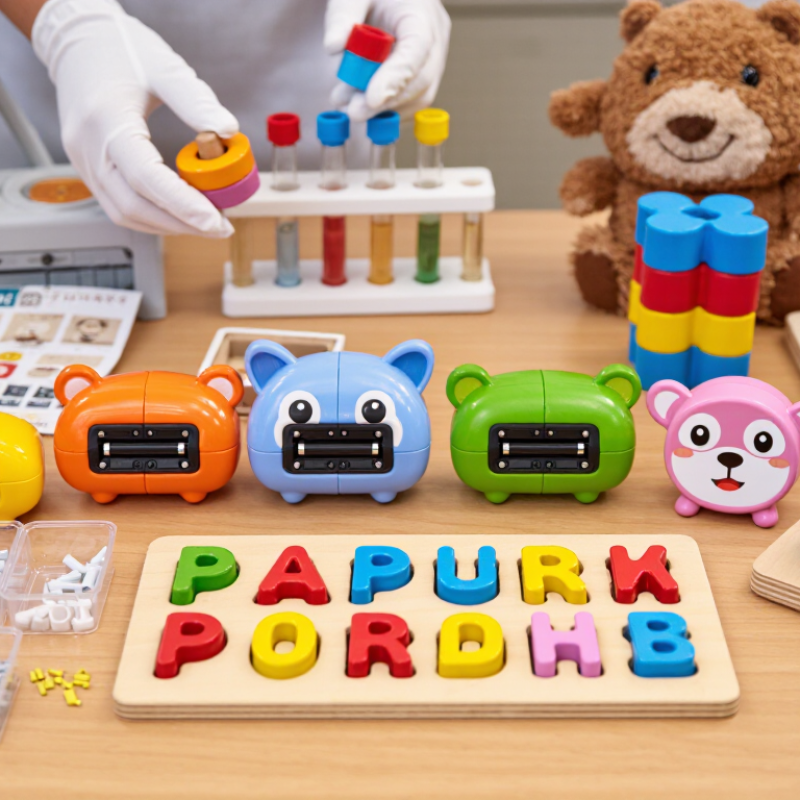
Before importing educational toys in 2026, define the product scope precisely.
“Educational” is a marketing claim, not a customs category. Record the toy’s learning purpose, target age, main material, power source, and play method.
A wooden counting board differs from an electronic coding kit. A puzzle differs from a construction set. These differences may affect testing, labeling, documentation, and tariff classification.
Separate product classification from customs classification. Product groups may include STEM kits, language cards, sensory toys, pretend-play sets, puzzles, and motor-skill toys.
Then ask whether the item is primarily plastic, textile, electronic, or assembled from multiple components. A qualified customs broker should verify the final HS code. Guessing can create costly delays.
The U.S. Consumer Product Safety Commission estimated 231,000 toy-related emergency-room injuries in 2023. The European Commission’s Safety Gate 2023 results also listed toys among the most frequently notified product categories, at about 13%.
Tips: Build a scope sheet for every SKU. Include photos, dimensions, materials, batteries, age grading, and intended skills. Request laboratory evidence before production. Check small parts and accessible magnets carefully. Review translated warnings with a native professional. A simple spreadsheet is useful, but it is not a compliance system. Recheck classifications when the design changes, even slightly. “Educational” alone proves very little.
Safety compliance should begin before placing a purchase order. In the United States, imported toys generally need compliance with ASTM F963 requirements, CPSIA testing, and a Children’s Product Certificate. Small parts, accessible magnets, surface coatings, sound levels, and age labels deserve separate checks.
The U.S. Consumer Product Safety Commission reported about 231,000 toy-related emergency department injuries among children under 15 in 2023. That figure makes “educational” an inadequate safety description.
For the European Union, importers should verify the latest EN 71 requirements and follow the General Product Safety Regulation. Product files need traceability, warnings, responsible-party information, and clear online safety details.
The European Commission’s 2024 Safety Gate report recorded 4,137 dangerous-product alerts across consumer categories, with toys among the frequently notified groups.
Check every sales market separately. Rules are not interchangeable.
Ask the factory for recent laboratory reports, material declarations, batch records, and production photographs. Test the exact version you will sell. A certificate for blue blocks may not cover a revised red set.
I have seen packaging changes create new risks. That part is easy to miss.
Keep samples from each shipment, inspect cartons for crushed edges, and review warning translations manually. Regulations change, and a document that looked acceptable last year may need review in 2026. Perfect paperwork is not proof of perfect control.
Safe importing begins with supplier evidence, not attractive samples. Request factory ownership details, production records, quality procedures, and recent independent audit findings. An ISO 9001 certificate helps, but it does not prove toy safety. Check whether the certificate matches the factory, product category, and current production site. The European Commission’s Safety Gate 2024 report identified toys as 15% of reported dangerous products. This is a serious warning for importers. Ask suppliers to explain corrective actions, not merely provide certificates.
Materials need closer inspection. Screen plastics, paints, coatings, adhesives, magnets, and batteries for restricted substances. Request laboratory reports for lead, phthalates, migration, flammability, small parts, and mechanical strength. Test production samples, not only golden samples. The U.S. Consumer Product Safety Commission reported 231,000 toy-related emergency-room injuries among children under 14 in 2023. A colorful design can still hide a weak seam or loose component. I have seen paperwork look complete while batch identification remained unclear. That gap deserves attention.
Tips: Use laboratories accredited to ISO/IEC 17025. Confirm the report lists the exact model, materials, test methods, and sample photographs. Keep purchase orders, declarations, labels, warnings, age grading, shipping records, and batch codes together. Re-test after material or factory changes. Requirements differ by destination, so check current rules for each market. Do not treat one successful test as permanent proof. Supplier trust matters, but documented verification matters more.
How to Import Educational Toys in 2026 Safely?
Prepare Customs, Shipping, Labeling, and Product Traceability
A safe import begins before the factory loads one carton. Confirm the correct HS code, commercial invoice, packing list, origin details, and declared value. Ask for recent safety test reports covering small parts, flammability, chemicals, and mechanical strength. Requirements vary by destination, so local customs guidance remains essential. The World Bank’s Logistics Performance Index 2023 shows that customs efficiency and shipment reliability still differ sharply between markets. Delays become expensive when documents are incomplete.
Shipping controls need physical detail. Use strong cartons, corner protection, moisture barriers, and numbered seals. Photograph the packed pallets before departure. Check whether the container has a valid inspection record. UNCTAD’s Review of Maritime Transport 2024 reports that more than 80% of global merchandise trade by volume moves by sea. That makes container planning important, even for small educational products. A low freight quote can hide weak handling. I have seen neat cartons arrive with crushed corners and unreadable labels.
Labels should show age guidance, warnings, material information, origin, importer contact details, and batch or lot numbers in the required language. Traceability should connect each carton to a production date, supplier record, test report, and shipment. A QR code helps, but it is not a complete system. The EU Safety Gate 2024 report recorded 4,137 alerts, showing why post-market monitoring matters. Keep a sample from every batch and record customer complaints. This step is often skipped. That is a mistake worth revisiting.
U.S. compliance baseline for customs, shipping documentation, labeling, and product traceability
The chart shows five core controls for importing children's educational toys into the United States. A value of 1 means the control is generally required; the small-parts warning applies only when the toy contains or is intended for use by children who may access small parts.
Regulatory basis: U.S. Consumer Product Safety Improvement Act requirements for third-party testing, Children's Product Certificate, tracking labels, and applicable small-parts warnings; U.S. Customs and Border Protection entry documentation requirements.
Arrival inspections should begin before cartons enter storage. Compare the shipment with approved samples, purchase records, and test documentation. Check packaging for crushed corners, water damage, missing warnings, and incorrect age labels. Inspect seams, wheels, strings, batteries, and detachable parts by hand. Small parts deserve special attention. Magnets require careful control. Record photographs, lot numbers, quantities, and inspection staff names. A clean carton does not prove a safe product.
In practice, importers need a written recall process before a problem appears. If a toy fails inspection, isolate the entire lot and stop distribution immediately. Traceability records should connect the factory, shipment, warehouse, and customers. Confirm reporting duties with the relevant market authority and follow its required timetable. Clear customer notices should explain the hazard, affected lots, return method, and refund or replacement process. Keep evidence of every action taken.
Ongoing compliance needs more than one laboratory report. Review safety requirements when designs, materials, packaging, suppliers, or production sites change. Perform risk-based sampling during later shipments, not only the first order. Maintain current certificates, test reports, supplier declarations, and complaint records. Train warehouse staff to spot loose components and damaged packaging. A checklist can still miss a failure. Our process should be questioned after every incident, even when no injury occurred. Requirements may differ by destination, so qualified local compliance advice remains necessary.
Request factory ownership details, production records, quality procedures, and recent independent audit findings. A certificate helps. It does not prove safety. Confirm the certificate matches the factory and current production site.
Screen plastics, paints, coatings, adhesives, magnets, and batteries. Request tests for restricted substances, lead, phthalates, flammability, and migration. Bright colors can hide weak seams or loose parts.
Test real production samples, not only approved samples. Production batches may differ from the original sample. That difference matters.
Use a laboratory accredited to ISO/IEC 17025. The report should identify the exact model, materials, methods, and sample photographs. Check the report against the shipment.
Keep purchase orders, declarations, labels, warnings, age grading, shipping records, and batch codes together. These records should connect the factory, shipment, warehouse, and customers. Unclear batch numbers create painful gaps.
Check crushed cartons, water damage, missing warnings, and incorrect age labels. Inspect seams, wheels, strings, batteries, magnets, and detachable parts by hand. Photograph defects and record lot numbers.
Isolate the entire lot and stop distribution immediately. Trace the affected shipment through warehouses and customers. Customer notices should explain the hazard, return method, and refund or replacement process.
Review requirements when designs, materials, suppliers, packaging, or factories change. Use risk-based sampling for later shipments. One successful test is not permanent proof. Our checklist may still miss something.
Importing educational toys safely in 2026 requires a structured process that begins with clearly defining the product scope, intended age group, functions, and risk level. Distributors should identify applicable safety standards and import regulations in each target market, then verify that suppliers can provide reliable materials, consistent manufacturing controls, test reports, certificates, and complete technical documentation. The key question is what should distributors know before importing educational toys: they must understand both product safety responsibilities and the evidence needed to demonstrate compliance.
Before shipment, distributors should prepare accurate customs information, packaging and labeling details, shipping documents, and traceability records for every batch. After arrival, inspections should confirm product identity, condition, labeling, and documentation before goods reach customers. A practical compliance plan should also include supplier monitoring, complaint handling, corrective actions, and a clear recall procedure. By combining careful sourcing, independent verification, organized records, and ongoing market surveillance, distributors can reduce safety risks, prevent costly delays, and build a dependable process for importing educational toys.

Ebid Toy