Parents and buyers often ask, “what certifications should educational toys have?” The answer depends on the toy’s materials, electronics, age range, and selling region. A wooden counting board may need different testing from a battery-powered science kit. Both still require careful safety review.
Dr. Amanda Gummer, founder of The Good Play Guide, has said, “Play is not a luxury; it is a necessity.” That principle should guide certification decisions. A credible educational toy should usually meet relevant standards such as ASTM F963 in the United States, EN 71 in Europe, or ISO 8124 in other markets. Electrical products may require additional testing, including battery safety and electromagnetic compatibility checks. CE and UKCA markings can support market access, but they are not always independent quality certifications. That distinction is easy to miss.
Look closely.
Responsible manufacturers also review CPSIA requirements, chemical restrictions, small-part risks, flammability, labeling, and age grading. A laboratory test report should identify the product, tested materials, standard version, and testing date. Vague claims like “non-toxic” or “fully certified” deserve questions. They may sound reassuring, yet provide little evidence.
Certification alone is not a guarantee. A toy can pass testing and still confuse children through unclear instructions or weak construction. I have found that the most useful evaluations combine laboratory evidence with practical observations: loose magnets, sharp edges, peeling paint, difficult battery compartments, and unrealistic learning claims. Some educational benefits are difficult to measure. That is where this topic needs more honesty. This guide examines which certifications matter, how to verify them, and what responsible buyers should still inspect themselves.
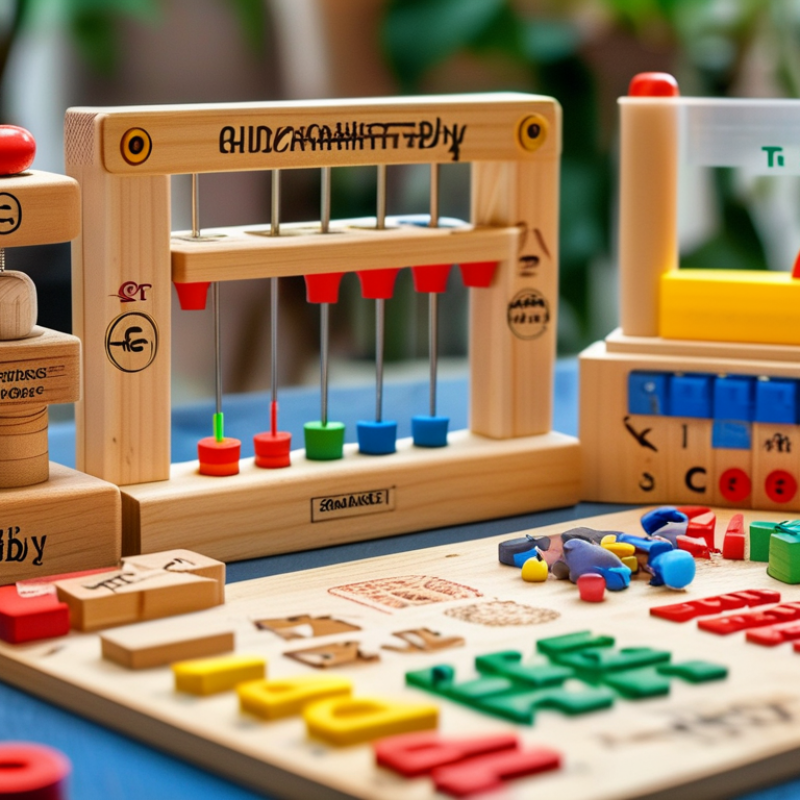
What Certifications Should Educational Toys Have?
Educational toys should be defined by age, function, and target market before certification is selected. For infants, prioritize rounded edges, secure parts, non-toxic materials, and choking-risk testing. For children aged three to six, check durability, magnets, batteries, and sound levels. Older children may use coding kits, science sets, or construction tools, requiring stronger electrical and instructional controls. Age labels must reflect real play behavior, not only the box design.
Function changes the compliance profile. A wooden puzzle needs physical, flammability, and chemical testing. An electronic learning toy may also require electrical safety, electromagnetic compatibility, battery protection, and data privacy reviews. In the United States, ASTM F963 and CPSIA requirements are central. European sales commonly require EN 71 testing and CE conformity. Market research from Circana reported approximately 28.6 billion dollars in United States toy sales during 2023, showing why market-specific compliance matters. One certificate rarely covers every country.
Target buyers also influence evidence. Schools may request material declarations, test reports, accessibility details, and long-term durability records. Parents often need clear age guidance and simple safety instructions. The Toy Association has repeatedly identified safety and value as major purchase considerations. Yet certification alone cannot prove educational quality. A toy can pass chemical tests and still offer weak learning value. That gap deserves attention. Product teams should document learning goals, observe children using prototypes, and review instructions with educators. Mistakes happen. Oversight should remain continuous.
Educational toys sold in the United States need more than a printed safety claim. For children’s products, compliance usually centers on CPSIA, ASTM F963-23, and applicable CPSC rules. CPSIA requires testing through a CPSC-accepted laboratory, supported by a Children’s Product Certificate (CPC). The CPC should identify the product, test results, manufacturer or importer, and applicable regulations. Keep records. Do not treat a general certificate as universal approval.
ASTM F963-23 is the mandatory federal toy safety standard for covered toys, including many educational products. Testing may examine sharp points, accessible edges, small parts, magnets, sound, flammability, and materials. Age grading matters because a counting board for toddlers faces different risks from a puzzle for older children. Inspect the actual toy. A wooden piece may look harmless, yet its coating, joint, or detachable knob can change the result. Material changes also require attention; a new paint formula can invalidate old test assumptions.
CPSC rules add practical duties, such as tracking labels, choking-hazard warnings when required, and limits on lead and phthalates. Labels must remain visible and durable after ordinary handling, not merely pass a design review. In practical compliance work, document control is often the weakest step. Teams test a sample, then quietly change a supplier or mold. That gap is easy to miss. Review age grades, components, packaging, and test reports together before shipment. Still, no checklist is perfect. Real use can reveal risks that laboratory planning overlooked.
| Compliance Area | Applicable U.S. Requirement | Who or What It Covers | Key Requirement or Limit | Typical Evidence | Compliance Status |
|---|---|---|---|---|---|
| Children’s Product Classification | CPSIA; CPSC age-determination guidance | Products designed or intended primarily for children 12 years old or younger | Age grading should be based on the product’s design, marketing, packaging, and reasonably foreseeable use. | Documented age-grade rationale, product specifications, packaging review, and safety assessment | Required when applicable |
| Third-Party Testing | CPSIA Section 102; 16 CFR Part 1112 | Manufacturers and importers of regulated children’s products | Testing must be performed by a CPSC-accepted third-party conformity assessment body for applicable requirements. | Laboratory test reports and records identifying the tested product, model, materials, and applicable rules | Required |
| Children’s Product Certificate | CPSIA Section 102; 16 CFR Part 1110 | Manufacturers and importers of children’s products | The certificate must identify the product, applicable regulations, testing laboratory, testing date, and responsible issuer. | Children’s Product Certificate (CPC) supplied to distributors and made available to CPSC upon request | Required |
| Toy Safety Performance | ASTM F963-23; incorporated into federal law by 16 CFR Part 1250 | Toys intended for children 12 years old or younger | Includes applicable requirements for mechanical hazards, flammability, electrical safety, acoustics, labeling, and other toy-specific hazards. | Third-party test report showing the applicable ASTM F963-23 sections were evaluated | Required when applicable |
| Effective ASTM Edition | ASTM F963-23; 16 CFR Part 1250 | Products subject to the federal toy safety standard | ASTM F963-23 became the mandatory federal toy safety standard on April 20, 2024. | Test report referencing ASTM F963-23 and applicable CPSC requirements | Current federal edition |
| Lead in Substrate Materials | CPSIA Section 101; 16 CFR Part 1500.87 | Accessible component parts of children’s products | Lead content must not exceed 100 parts per million (0.01%) by weight, subject to statutory exclusions and exceptions. | Material-specific chemical test report using an appropriate CPSC-accepted method | Required |
| Lead in Surface Coatings | CPSIA Section 101; 16 CFR Part 1303 | Paint, coatings, and similar surface finishes on children’s products | Lead must not exceed 90 parts per million (0.009%) in paint or surface coatings. | Coating test report for each relevant color, finish, or material construction | Required |
| Restricted Phthalates | CPSIA Section 108; 16 CFR Part 1307 | Accessible plasticized components and certain children’s toys and child-care articles | Each restricted phthalate must not exceed 0.1% (1,000 ppm) in accessible parts. The regulated list includes DEHP, DBP, BBP, DINP, DIDP, and DnOP, plus specified restrictions for DIBP and DPENP. | Phthalate laboratory report covering accessible plastics, coatings, soft parts, and other applicable materials | Required when applicable |
| Small Parts and Choking Hazard | 16 CFR Part 1501; ASTM F963-23 | Toys and articles intended for children under 3 years, and toys with small parts intended for older children | Small-part testing is based on the applicable use and age group. Required choking warnings must appear where the regulation applies. | Small-parts cylinder testing, use-and-abuse testing, age grading, and packaging or product warning review | Required when applicable |
| Magnets | ASTM F963-23; 16 CFR Part 1262 where applicable | Toys containing magnets or magnetic components | Magnets must meet applicable toy safety performance requirements. Certain high-powered magnet products are subject to additional federal restrictions and labeling requirements. | Magnet retention, accessibility, ingestion-risk, strength, and labeling evaluations | Required when applicable |
| Button Cell or Coin Battery Safety | Reese’s Law; 16 CFR Part 1263 | Products containing or designed to use button cell or coin batteries | Battery compartments must resist access by young children, and applicable products must carry required warnings and packaging statements. | Battery-compartment access test, warning-label review, packaging review, and product test report | Required when applicable |
| Tracking Label | CPSIA Section 103 | Children’s products manufactured after the applicable statutory implementation date | The product and packaging must carry permanent, legible information that identifies the manufacturer or private labeler, production location and date, and identifying batch or run details, to the extent practicable. | Product, packaging, or label artwork showing traceability information | Required |
| General Certificate Information | CPSIA Section 102; 16 CFR Part 1110 | All products requiring a CPC | The certificate must be accurate, complete, in English, and based on testing or a reasonable testing program. | Current CPC, supporting test reports, production records, and compliance documentation | Required |
| Record Retention | CPSIA Section 102; CPSC certificate and testing requirements | Manufacturers, importers, and responsible suppliers | Maintain test reports, certificates, material records, production information, and corrective-action records for the period required by applicable law and business controls. | Controlled compliance file linked to product model, revision, batch, and supplier documentation | Required |
What Certifications Should Educational Toys Have?
For educational toys sold in the European Union, CE marking is a legal conformity declaration, not a quality award. The manufacturer must assess the toy against applicable safety requirements before placing it on the market. This process includes risk analysis, technical documentation, production controls, and clear traceability. A responsible assessment examines the toy’s materials, design, age range, instructions, and foreseeable misuse. CE marking should be supported by evidence, not printed as decoration.
EN 71 Parts 1–3 are central to many toy safety evaluations. EN 71-1 examines mechanical and physical hazards, such as small parts, sharp edges, weak seams, and choking risks. EN 71-2 addresses flammability, including how materials behave near ignition sources. EN 71-3 limits the migration of certain elements from accessible toy materials. Testing should reflect the finished product, surface coatings, and realistic use conditions. Shortcuts create risk.
An independent laboratory can provide useful test evidence, but responsibility still rests with the manufacturer or responsible economic operator. EN 71 compliance does not replace other applicable requirements, especially for toys containing electrical or electronic features. Keep the test reports current. Formulas and suppliers can change. One uncomfortable truth is that a successful test report may not reveal every real-world failure. Children bend, bite, drop, and combine toys in unexpected ways. Strong compliance therefore requires technical discipline, honest review, and continuous attention after production begins.
ISO 8124 and China’s GB 6675 series are technical standards, not automatic certificates. ISO 8124-1 evaluates mechanical and physical risks, including small parts and sharp edges. ISO 8124-2 addresses flammability. ISO 8124-3 controls the migration of certain elements from accessible materials. These checks matter for educational toys with molded parts, coatings, magnets, or sensory components.
China’s GB 6675 series follows a similar risk-based structure. GB 6675.1 defines general safety requirements, while GB 6675.2 covers mechanical and physical properties. GB 6675.3 focuses on chemical migration, and GB 6675.4 addresses specific toy categories.
Testing should match the product’s age grading and intended use. A classroom counting set needs different evidence from a water-play toy. The label is part of safety evidence.
Industry data shows why this comparison deserves care. The European Commission’s Safety Gate 2023 report identified toys as 15% of reported dangerous-product alerts. The U.S. Consumer Product Safety Commission’s 2023 toy injury report estimated about 231,000 emergency-department injuries involving children under 15. These figures are not certification results, but they reveal persistent exposure.
A laboratory report can look complete while missing a poorly fitted battery cover or a coating applied unevenly.
I would request ISO 8124 or GB 6675 test evidence, material declarations, production controls, and recent surveillance records. One weakness remains: standards cannot replace hands-on inspection of the finished toy.
What Certifications Should Educational Toys Have?
For educational toys, a certificate alone is not enough. Ask for the complete test report, not a cropped approval page. The report should identify the exact toy, materials, model number, age range, production sample, and testing date. It should also show relevant checks for physical safety, chemical content, and flammability. Check whether the laboratory is independent and technically competent. Requirements differ by destination market, so confirm the applicable safety rules before purchase.
Tracking labels add practical protection. Look for a batch code, date code, or traceable production number on the toy or packaging. A useful label connects the item to a factory record, inspection result, and responsible seller. Test it in real conditions. Can staff read it after handling, wiping, or opening the box? Tiny print can fail. A missing code makes later investigation much harder.
Third-party certificates deserve careful reading. Verify the certificate number through the issuer’s approved verification channel, then compare its scope with the actual product. A certificate for one material or toy series may not cover every version. Keep invoices, sample photos, reports, and label records together. That evidence supports stronger purchasing decisions and faster responses when concerns appear. Still, paperwork is not perfect; factories can change paint, glue, or packaging after testing. Periodic checks and random sample reviews remain necessary. This step is often neglected.
A reliable compliance review should verify more than a certificate logo. Check the applicable toy-safety standard, an accredited laboratory test report, product and batch traceability, age grading, and third-party certification where required or available.
The chart summarizes the main evidence categories to review. Requirements vary by market: ASTM F963 is mandatory for toys sold in the United States, EN 71 is commonly used for demonstrating toy safety in the European Union, and ISO 8124 is used in several international markets.
Classify them by age group, function, and target market. A toddler’s counting board has different risks from a coding kit. Age labels must reflect real play behavior. Box appearance is not enough.
Use rounded edges, secure parts, and non-toxic materials. Test every detachable piece for choking risks. Check seams, knobs, and coatings closely. Small parts can disappear quickly.
Inspect durability, magnets, batteries, sound levels, and small components. A loose battery cover can create a serious hazard. Magnets require careful testing. Do not rely only on visual inspection.
Coding kits, science sets, and construction tools may need stronger electrical controls. Instructions should explain safe assembly, operation, and supervision. Battery protection and electrical testing may also be necessary. Learning value still needs review.
A wooden puzzle may need physical, flammability, and chemical testing. Inspect sharp points, accessible edges, coatings, joints, and detachable knobs. A harmless-looking piece may hide a weak connection. Looks can mislead.
Electronic toys may require electrical safety and electromagnetic compatibility reviews. Battery protection should be tested under realistic use. Data privacy may matter when toys collect or transmit information. The software side is easy to overlook.
Usually not. Different markets may require different tests, documents, markings, and declarations. United States sales commonly involve children’s product testing and safety certification. European sales commonly require toy safety testing and conformity documentation. One certificate is not universal.
Keep laboratory reports, product details, supplier records, labels, and children’s product certificates. Records should identify the tested product and applicable requirements. Review documents again after changing materials, suppliers, or molds. Small changes matter.
Schools may request material declarations, test reports, accessibility details, and durability records. Parents usually need clear age guidance and simple safety instructions. A bright package cannot replace readable warnings. Clarity helps.
No. Certification mainly addresses safety and compliance. It does not prove strong learning outcomes. Teams should document learning goals and observe children using prototypes. Some assumptions will be wrong. Review them honestly.
When asking what certifications should educational toys have, the answer depends on the toy’s age group, educational function, materials, design, and target market. Manufacturers should first identify the applicable safety requirements for each product and intended age range. In the United States, this commonly includes compliance with the CPSIA, ASTM F963-23, and relevant consumer product safety rules. These requirements may address factors such as mechanical safety, flammability, chemicals, physical properties, and product tracking information.
For products sold in the European Union, manufacturers generally need to assess CE marking obligations and applicable EN 71 requirements, including Parts 1–3 for mechanical and physical properties, flammability, and the migration of certain elements. Global projects may also consider ISO 8124 and China’s GB 6675 series. Before market entry, businesses should verify complete laboratory test reports, tracking labels, technical documents, and valid third-party certificates. Proper documentation helps demonstrate that the educational toy is suitable for its intended users and meets the safety expectations of each target market.

Ebid Toy