How to Choose the Best China OEM Educational Toy Suppliers?

Time:2026-10-10 Author:Mason
0%

Choosing a China OEM educational toy supplier is a commercial decision, not merely a price comparison. The right partner must translate learning goals into safe, durable, and scalable products. This requires evidence from factory audits, material records, prototype tests, and real production experience.

Market data shows why the decision deserves care. Grand View Research estimates that the global educational toys market reached approximately USD 54.6 billion in 2023 and may grow at a 10.8% compound annual growth rate through 2030. Fortune Business Insights also forecasts strong expansion, although its market size differs because it uses different product definitions. The numbers are not identical. That matters.

A practical guide to how to choose OEM educational toy suppliers should examine more than catalogs and quotations. It should assess design engineering, mold ownership, minimum order quantities, production capacity, quality-control procedures, and communication speed. Buyers should request test reports relevant to their destination markets, such as EN 71, ASTM F963, or other applicable requirements. Certifications alone are not enough. A sample may pass inspection while mass production changes materials, paint, or assembly details.

Look closely.

The best supplier should explain its corrective-action process after a failed inspection. It should also provide traceable batch records and clear packaging specifications. Industry reports from the International Trade Centre and the World Bank underline the importance of supply-chain transparency and trade compliance for international sourcing. Still, no checklist is perfect. A video factory tour can hide weaknesses, and a polished sample can conceal inconsistent production. Therefore, this article presents a verification-based approach to selecting reliable China OEM educational toy suppliers, balancing cost, learning value, safety, and long-term cooperation.
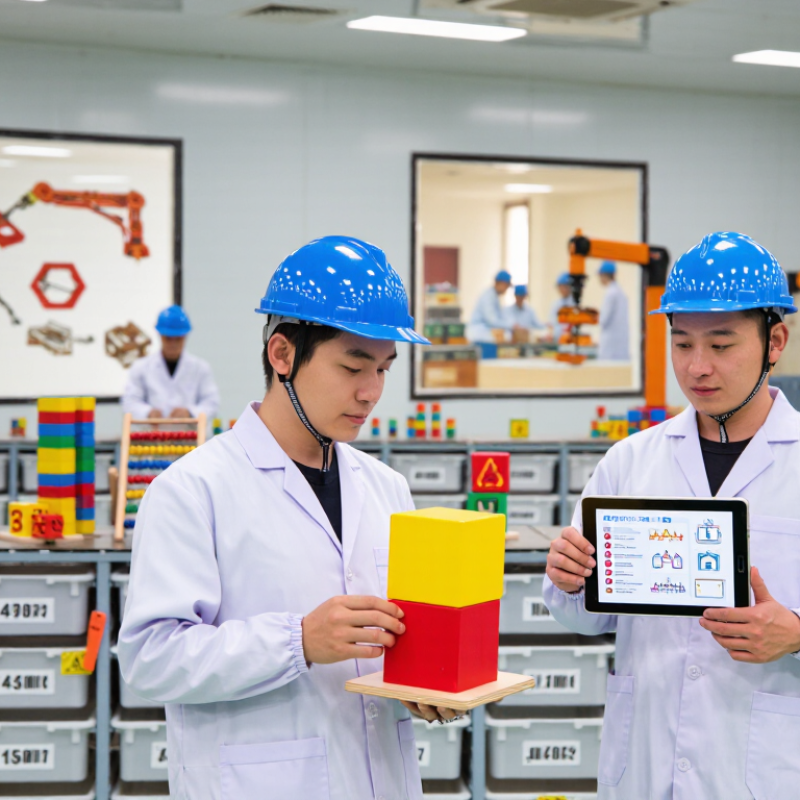
How to Choose the Best China OEM Educational Toy Suppliers?

Map Demand: Global Toy Sales Reached $108.7B in 2023 (Circana)

How to Choose the Best China OEM Educational Toy Suppliers?

Global toy sales reached $108.7 billion in 2023, according to Circana’s Global Toy Industry report. However, the market declined about 7% from 2022. The headline is powerful, but incomplete. Demand differs by age group, learning purpose, price point, and region. Map these differences before contacting a China OEM supplier. A counting set may fit preschool classrooms, while a robotics kit may suit older home learners. Demand is uneven.

Circana also reported that games and puzzles remained among the stronger toy categories in several major markets. This suggests practical learning, family interaction, and repeat use deserve close attention.

Compare search trends, distributor feedback, classroom purchasing habits, and seasonal sales data. Grand View Research identifies expanding interest in educational toys, especially products supporting cognitive and motor development. Still, market forecasts are not purchase orders. Treat them as direction, not proof.

When evaluating suppliers, ask for age grading, material specifications, prototype records, and independent safety test reports. Check whether the factory can support destination-market requirements, including chemical, mechanical, labeling, and small-part controls. Review MOQ, tooling fees, lead times, packaging dimensions, and quality inspection procedures together. A low quotation can hide expensive revisions. A polished sample can hide weak production control. My own preferred approach is less glamorous: test a small batch, observe how children actually use it, then revise the design before scaling. Perfect demand mapping is unlikely. Careful correction is realistic.

Prioritize China OEMs, Which Produce Over 70% of Global Toys

China OEM educational toy suppliers deserve serious attention because China produces over 70% of the world’s toys, according to widely cited industry estimates. This manufacturing depth supports flexible tooling, competitive pricing, and large production capacity. A capable OEM can turn a classroom concept into puzzles, STEM kits, or sensory learning products with measurable specifications.

Do not choose a supplier from photos alone. Request factory videos, material declarations, production samples, and recent quality records. Check whether the factory controls molding, printing, assembly, and packaging internally. Ask how it tests small parts, sharp edges, paint adhesion, and repeated use. Educational value also matters. A toy should support counting, problem-solving, coordination, or language practice, not merely look colorful.

A low quotation can hide weak testing. I have seen buyers focus too heavily on unit price and overlook mold revisions, sample delays, and packaging damage. That decision often becomes expensive later. Compare suppliers through a written specification, pilot order, inspection plan, and clear communication schedule. Ask for evidence of compliance with the destination market’s toy safety requirements. Supplier selection is rarely perfect. Even experienced buyers should leave room for design changes after children handle the first samples.

How to Choose the Best China OEM Educational Toy Suppliers? — Prioritize China OEMs, Which Produce Over 70% of Global Toys
Evaluation Dimension Relevant Data or Benchmark Why It Matters for Educational Toys Recommended Verification Method
China’s Manufacturing Position More than 70% of global toys is a widely cited industry estimate for China’s share of toy manufacturing; the exact percentage varies by product category and measurement year. A large manufacturing base can provide broader tooling capabilities, mature component supply chains, and greater experience with export requirements. Confirm the supplier’s product category, annual capacity, export markets, and recent production records rather than relying only on national industry statistics.
Educational Function Products should have clearly defined learning objectives, such as fine-motor development, spatial reasoning, language practice, counting, or problem-solving. A toy can be safe and attractive without delivering meaningful educational value. A documented learning objective supports product positioning and buyer approval. Request product briefs, age-grading rationale, play instructions, prototype testing records, and feedback from educators or child-development specialists.
Age-Grading and Safety Design Age recommendations must reflect foreseeable use, small parts, magnets, sharp edges, cords, noise, and mechanical hazards. Small parts are especially critical for products intended for children under 3 years. Correct age grading reduces injury risk, improves compliance accuracy, and helps retailers select the correct sales category. Review the risk assessment, bill of materials, warning labels, safety artwork, and test reports for the exact production version.
International Toy-Safety Compliance Common destination requirements include EN 71 for the European Union, ASTM F963 and applicable U.S. requirements for the United States, and GB 6675 for China. Different markets impose different chemical, mechanical, flammability, labeling, and documentation requirements. Specify the target market before sampling and obtain laboratory reports that identify the exact model, materials, colorants, and production date.
Chemical and Material Control Key controls commonly include heavy metals, phthalates where applicable, restricted substances, migration of certain elements, and material traceability. Educational toys often use plastics, paints, coatings, adhesives, magnets, textiles, and electronic components that require separate material controls. Ask for supplier declarations, material safety documentation, incoming-material inspection records, and independent chemical-test reports.
Factory Audit Readiness A reliable OEM should be able to provide a registered legal entity, factory address, production scope, quality procedures, and inspection records. Factory transparency helps distinguish an actual manufacturer from a trading intermediary and reduces supply-chain risk. Use a recent third-party factory audit, verify the business license, inspect production lines, and match the audited site with the export documentation.
Customization Capability Evaluate the supplier’s ability to modify molds, colors, materials, packaging, instructions, electronic functions, and educational content. OEM projects usually require more than applying a logo; educational products often need changes to play rules, difficulty level, and learning content. Request a written change-control process, prototype history, mold-ownership terms, engineering drawings, and sample approval records.
Prototype and Sampling Process A controlled process should include design review, functional prototype, safety review, pre-production sample, and approved golden sample. Formal sample gates reduce the risk that mass production differs from the approved educational or safety specification. Record sample revisions, approval dates, tolerance limits, approved materials, packaging details, and authorized signatories.
Quality-Control System Core controls should cover incoming-material inspection, first-piece approval, in-process checks, finished-goods inspection, and corrective action. Educational toys often contain multiple parts that must fit correctly, withstand repeated play, and remain safe after assembly. Review inspection standards, defect classifications, control plans, calibration records, and the supplier’s corrective-action reports.
Production Lead Time Lead time depends on tooling, material availability, product complexity, testing, packaging, and order quantity. It should be confirmed as a written project schedule, not a generic promise. Testing and packaging approval can add time beyond normal production, especially for a new educational product. Request a milestone plan covering design freeze, tooling, pilot run, laboratory testing, mass production, inspection, and shipment.
Minimum Order Quantity MOQ is product-specific and is usually influenced by mold investment, printing method, packaging volume, and material purchasing requirements. A low MOQ may support market testing, while a high MOQ may reduce unit cost but increase inventory exposure. Request separate quotations for prototype quantity, pilot quantity, standard MOQ, and repeat-order quantity, including tooling and packaging charges.
Packaging and Instruction Quality Packaging should include required warnings, age grading, importer information where applicable, care instructions, and clear play directions in the target language. Educational value can be lost if children or caregivers cannot understand the activity, learning objective, or safety instructions. Review packaging artwork, multilingual instructions, label placement, barcode requirements, and destination-market compliance before production.
Sustainability and Material Efficiency Useful indicators include recycled-content claims supported by documentation, recyclable packaging design, reduced plastic use, and responsible material sourcing. Lower material use can reduce packaging cost and environmental impact, but safety and durability must not be compromised. Request material specifications, recycled-content evidence, packaging weight data, supplier declarations, and relevant certifications when claimed.
Intellectual-Property Protection OEM agreements should define ownership and permitted use of molds, artwork, product designs, educational content, tooling, and digital files. Educational products may contain original play mechanics, illustrations, characters, lesson content, and proprietary molds. Use a written NDA and manufacturing agreement, identify ownership of every deliverable, and restrict unauthorized production or subcontracting.
Subcontracting Transparency The supplier should disclose whether molding, painting, electronic assembly, printing, testing, or packing is performed by another facility. Unapproved subcontracting can create gaps in quality control, traceability, confidentiality, and compliance testing. List all critical production sites in the contract and require written approval before any site or process is changed.
Export and Logistics Capability Assess experience with commercial invoices, packing lists, certificates of origin where required, export declarations, carton markings, and shipping terms. Accurate documentation reduces customs delays and helps coordinate delivery to distributors, schools, and retailers. Review anonymized shipping documents, carton specifications, loading procedures, insurance responsibilities, and agreed Incoterms.
Supplier Selection Score Use a weighted scorecard: compliance and safety 25%, quality system 20%, OEM engineering 15%, educational design 15%, delivery reliability 10%, communication 10%, and cost 5%. Weighting safety, quality, and engineering more heavily prevents a low quotation from overshadowing higher product and regulatory risks. Score at least three qualified suppliers using identical evidence requirements, then conduct an on-site or independent audit before final approval.
Reference framework: widely used toy-safety and product-compliance frameworks include EN 71, ASTM F963, and GB 6675. Requirements vary by destination, product type, age grade, materials, and sale date; confirm the applicable rules with an accredited testing laboratory or qualified compliance professional.

Audit Suppliers Against ISO 9001, BSCI, and Verified Factory Capacity

Choosing a China OEM educational toy supplier requires more than comparing prices. A practical audit should examine ISO 9001 controls, BSCI performance, and actual factory capacity. ISO 9001 can reveal how the factory manages drawings, material checks, inspections, and corrective actions. Ask to see controlled documents, not only a certificate copy. Then trace one sample from incoming materials to packed cartons.

BSCI findings offer another useful view. They can indicate how the factory manages working conditions, wages, working hours, and workplace safety. Review the latest audit date and unresolved findings carefully. A favorable report is helpful, but it is not permanent proof of daily compliance. Conditions can change after peak production begins. Ask how the supplier monitors subcontractors, too.

Verified capacity must match your launch schedule. During an onsite visit, count active production lines, molding machines, inspectors, and warehouse space. Compare these observations with recent production records. Request evidence from a similar order, including output per day and rejection rates. I have learned that impressive equipment can still hide weak planning. Capacity may shrink when several customers share the same lines. Build a small pilot order into the evaluation, and inspect samples before approving mass production. Mistakes at this stage are cheaper, although they may still expose gaps in your audit process.

Compare MOQ, Tooling, Lead Times, and Landed Cost Using 3–5 Quotes

Choosing the best China OEM educational toy supplier requires more than comparing unit prices. Request three to five detailed quotes using the same product specification. Record MOQ, sample fees, packaging requirements, and payment terms in one spreadsheet. A low MOQ may reduce inventory risk. However, it often increases the unit cost.

Tooling deserves careful attention. Ask whether the mold is new, reusable, or shared. Confirm tooling ownership, revision charges, maintenance, and expected production cycles. A supplier may quote inexpensive tooling, then charge heavily for small design changes.

Request a sample with actual materials, moving parts, paint, and packaging. Check safety documentation and independent test reports before approval.

Lead time should include sampling, tooling, production, inspection, and shipping. A quoted 30-day production period can become 50 days after revisions. Landed cost gives a clearer comparison. Add the product price, tooling amortization, freight, insurance, import duties, taxes, inspection, and local storage. For example, a cheaper quote may lose its advantage after ocean freight and extra packaging. Ask each supplier to show these costs separately. I have seen buyers overlook carton volume and regret the result. My own comparison sheets are not perfect either; supplier assumptions sometimes remain unclear. Recheck every number before signing a purchase agreement.

Validate EN71, ASTM F963-23, CPSIA, and ISO 8124 Compliance

Choosing a China OEM educational toy supplier requires more than comparing prices and sample quality. Compliance evidence should be checked before tooling begins. Ask for current laboratory reports, product specifications, material declarations, and factory quality procedures.

EN71 testing should match the toy’s category and intended age. Check mechanical hazards, flammability, migration of certain elements, and relevant chemical limits. ASTM F963-23 applies to toys sold in the United States. Review testing for small parts, sound levels, magnets, sharp points, and accessible batteries. Details matter.

CPSIA compliance also requires attention to lead, phthalates, tracking labels, and applicable certifications. ISO 8124 can provide an additional international safety reference, but it does not replace destination-market requirements. Confirm the exact model, materials, colors, and age grading on every report. A report for a similar product may not protect your product.

Request sample-based testing from an independent laboratory. Visit the production line when possible. Inspect incoming materials, assembly controls, and final packing. Ask how failed batches are isolated and recorded. Good suppliers answer with documents, not promises.

I once considered supplier experience enough. That was too simple. Standards change, materials vary, and production shortcuts can appear after approval. Keep sealed samples, audit records, and change-control agreements. Re-test after any material, mold, or packaging change. Small oversights can become expensive recalls.

Pilot Orders with AQL 1.5/2.5 Inspections and a Weighted Scorecard

Choosing a China OEM educational toy supplier should begin with a controlled pilot order, not a large commitment. The European Union’s 2023 Safety Gate report recorded toys as 13% of notified dangerous products. The U.S. Consumer Product Safety Commission also reported more than 200,000 toy-related emergency-room injuries in 2023. Quality evidence matters.

For the pilot, define major defects against AQL 1.5 and minor defects against AQL 2.5, using ISO 2859-1 sampling tables. AQL is an acceptance rule, not a promise of zero defects. Inspectors should check dimensions, loose parts, sharp edges, labeling, packaging, and function. Photograph every failed sample. Record lot size, sample size, defect class, and acceptance numbers.

Use a weighted scorecard before comparing suppliers. Assign 35% to inspection results, 25% to material and safety documentation, 20% to production consistency, and 10% each to communication and corrective-action speed. Require dated test reports from competent laboratories, but verify the product description and model details. A polished certificate can still describe the wrong material.

Do not overtrust one successful pilot. That is a common mistake. Repeat the inspection after design changes or new tooling. A supplier may pass 1,000 units and struggle at 10,000. Keep a small reserve for destructive testing, because perfect-looking samples can hide weak seams, poor adhesion, or inconsistent educational components.

How to Choose the Best China OEM Educational Toy Suppliers?

Pilot Orders with AQL 1.5/2.5 Inspections and a Weighted Scorecard

Based on ANSI/ASQ Z1.4 normal single sampling, General Inspection Level II, for a lot size of 1,201–3,200 units, the sample size is 125 units. AQL 1.5 permits up to 5 nonconforming units before rejection at 6, while AQL 2.5 permits up to 7 before rejection at 8.

Use these inspection gates with a weighted scorecard: quality and compliance 50%, tooling and production capability 20%, total cost 15%, lead time 10%, and MOQ or flexibility 5%. AQL is a sampling method, not a guarantee of zero defects.

FAQS

How can buyers estimate demand for educational toys?

Compare age groups, learning goals, prices, regions, and seasonal sales. A counting set may suit preschool classrooms, while a robotics kit may fit older learners. Demand is uneven. Forecasts guide decisions, but they do not guarantee orders.

Which educational toy categories may receive stronger interest?

Games and puzzles often support family interaction and repeat use. Products developing thinking or motor skills may also attract buyers. Check search trends, distributor comments, classroom purchases, and seasonal data. Interest alone is not proof.

What documents should a supplier provide?

Request age grading, material details, prototype records, and independent safety reports. Review chemical, mechanical, labeling, and small-part controls for the destination market. Check the product model carefully. A document may describe the wrong item.

How should a factory’s quality system be evaluated?

Review its quality-management procedures for drawings, incoming materials, inspections, and corrections. Ask for controlled records, not only certificate copies. Trace one sample from raw materials to packed cartons. Paperwork can look better than daily practice.

How can buyers verify real production capacity?

During a factory visit, count active lines, molding machines, inspectors, and warehouse space. Compare these details with recent output records and rejection rates. Ask about shared production lines. Capacity can shrink quickly.

Why is a small pilot order useful?

A pilot reveals production problems before a large commitment. Inspect dimensions, loose parts, sharp edges, labels, packaging, and function. Photograph failed samples and record each defect clearly. Small mistakes cost less.

What inspection limits should buyers use for a pilot order?

Set separate limits for major and minor defects using a recognized sampling method. One practical example uses stricter limits for major defects and slightly wider limits for minor defects. Sampling does not promise zero defects. It only supports a decision.

How should suppliers be compared beyond price?

Use a weighted scorecard covering inspection results, safety documents, consistency, communication, and corrective action. Inspection results should carry the greatest weight. Repeat checks after design changes or new tooling. One successful batch proves little.

Conclusion

Choosing the right supplier begins with understanding demand, target markets, and product requirements. With global toy sales reaching approximately $108.7 billion in 2023 and China producing more than 70% of the world’s toys, China OEM manufacturers can offer strong production capabilities and cost advantages. To understand how to choose OEM educational toy suppliers, buyers should audit each factory’s ISO 9001 quality system, social compliance practices, production capacity, and ability to provide consistent documentation.

A reliable evaluation should compare three to five quotations, considering MOQ, tooling fees, lead times, shipping, duties, and total landed cost rather than unit price alone. Suppliers must also demonstrate compliance with relevant requirements, including EN71, ASTM F963-23, CPSIA, and ISO 8124. Before making a long-term commitment, place a pilot order and conduct inspections based on appropriate AQL levels, such as 1.5 for critical quality control and 2.5 for general defects. A weighted scorecard can then support an objective final decision.

Mason

Mason

Mason is a seasoned marketing professional with a deep expertise in the company's offerings and a passion for driving brand awareness. With a strong background in digital marketing strategies, he has an innate ability to connect with diverse audiences and effectively communicate product benefits.......