Choosing the right educational toy manufacturer in 2026 requires more than comparing factory prices. Buyers need dependable quality, clear communication, and evidence that products support meaningful learning. This guide examines the 2026 best educational toy manufacturers through practical sourcing criteria, not promotional claims.
The central question is how to source reliable educational toy manufacturers without overlooking small warning signs. A polished catalog can hide inconsistent materials, weak quality control, or unclear production records. Request product samples, factory profiles, recent testing documents, and detailed material specifications. Inspect the toy’s edges, paint coverage, moving parts, packaging, and instruction quality. Small details matter.
Experience also shows that one successful sample proves very little. A responsible supplier should explain production steps, inspection points, batch tracking, and corrective actions. Ask how the factory handles defects after shipment. Ask harder questions. Independent audits and recognized safety testing can strengthen confidence, but buyers should verify document dates and product-model matches. Communication speed is useful, yet honest answers matter more. Cultural fit, minimum order quantities, lead times, and tooling ownership also affect long-term results.
This introduction will help importers, retailers, schools, and brand owners compare manufacturers with greater discipline. It will consider product innovation, educational value, factory capability, customization, sustainability, and supply reliability. Some evaluations may remain imperfect because supplier information changes quickly. That is worth acknowledging. A careful sourcing decision combines documented evidence, physical inspection, and professional judgment rather than rankings alone.
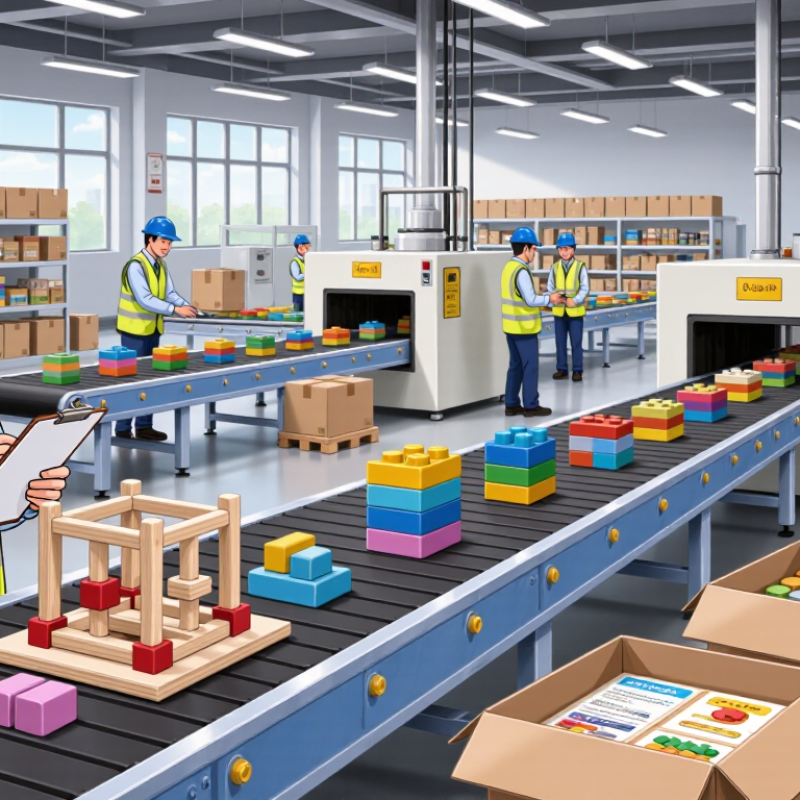
A reliable educational toy manufacturer in 2026 must prove more than low pricing. Circana’s 2024 global toy market review reported a 7% sales decline across major markets in 2023. This pressure can encourage rushed production. Buyers should inspect factory routines, not attractive presentations.
Ask for recent batch records, material declarations, and independent safety test reports. Check whether workers inspect paint, magnets, edges, and small parts before packing. A dependable factory should provide lot numbers and traceability within hours, not after several emails. It should also explain corrective actions when a sample fails. ISO’s 2023 survey recorded more than 1.2 million ISO 9001 certificates worldwide. However, a certificate alone cannot prove consistent toy quality. It can create false comfort.
During sourcing, request a pilot order with the exact educational function, packaging, and labeling. Watch how the manufacturer handles a minor defect, such as a loose wheel or uneven wooden surface. Their response reveals more than a sales meeting. Clear production milestones matter too, especially when tooling changes affect delivery. I have seen promising samples become weaker after mass production. That risk deserves written controls, retained samples, and scheduled inspections. Reliable partners accept questions, share limitations, and document every important decision. Their factory may not be perfect. Honest evidence is more valuable than polished promises.
In 2026, evaluating educational toy manufacturers requires more than comparing prices or viewing attractive samples. Reliable suppliers should explain their material choices, production controls, and testing procedures clearly. Ask for evidence. Request recent laboratory reports, safety certificates, material declarations, and age-grading records for each product category. These documents should match the exact toy, not a similar sample.
A capable manufacturer maintains traceability from raw materials to finished cartons. Production records should identify batch numbers, inspection dates, and responsible quality staff. During a factory visit, check mold storage, paint handling, assembly lines, and packaging areas.
Small details matter, such as sealed components, readable warnings, and secure battery compartments. Pictures are insufficient. Independent testing against applicable standards, including chemical, mechanical, and flammability requirements, adds stronger assurance.
Educational value also deserves practical review. A toy should support measurable skills, such as counting, spatial reasoning, language development, or fine-motor control. Ask whether teachers or child-development specialists helped shape the design. Observe how children use the prototype, including misuse and frustration. I have learned that polished samples can hide weak instructions or fragile parts. One supplier may pass testing yet struggle with consistent production. That risk requires pre-shipment inspections, random batch checks, and written corrective-action procedures. Ethical sourcing should also include worker safety, transparent subcontracting, and honest production timelines. Reliability is proven repeatedly, not promised once.
Reliable sourcing starts with evidence, not polished catalog images. Ask each manufacturer for a current factory profile, material list, and traceable production records. Request samples from the same process used for bulk orders. Check sharp edges, loose parts, paint adhesion, magnets, batteries, and small components. Keep dated photos and written findings.
Safety documents require careful checking. Match the certificate to the exact product, model, materials, and intended age range. Verify the testing laboratory, report number, test date, and laboratory accreditation. Standards depend on the destination market. For example, US products may require CPSIA-related compliance, while European products may need EN 71 testing. Ask for technical files and declarations where applicable. Never accept a printed logo alone. A certificate may cover one sample, not every color or later batch.
Quality control should continue after approval. Use an inspection plan with measurable limits for dimensions, weight, stitching, sound levels, and packaging damage. Arrange independent testing or factory inspections before shipment. These checks cost more, and they can still miss hidden defects. That matters. A clean sample does not prove consistent production. I would treat that assumption as a sourcing mistake. Require corrective-action records when failures appear, and confirm the next batch with fresh samples. A reliable manufacturer answers specific questions, shares traceability details, and accepts reasonable verification without pressure.
Where to Find and Compare Qualified Toy Manufacturers
Reliable sourcing starts with several channels, not one online search. Use verified industry directories, trade fairs, export associations, and professional referrals. In my sourcing experience, factory websites are useful, but they rarely show the complete picture. Request a legal business license, production address, product categories, and recent export records. Then compare at least three manufacturers using the same questions and specifications.
Look closely at sample quality, material traceability, production capacity, minimum order quantity, and communication speed. Ask for test reports from qualified laboratories and confirm that testing matches the destination market. Depending on the product and region, requirements may include rules for mechanical safety, chemicals, flammability, labeling, and age grading. A factory audit should review incoming materials, assembly lines, worker training, storage conditions, and final inspections. Photos help. An on-site visit is stronger.
Do not judge a supplier by a polished sample alone. Request a pre-production sample, a written quality agreement, and clear procedures for handling defects. Compare quotation details carefully, including tooling, packaging, testing, shipping terms, and replacement policies. I once treated a low price as a major advantage; later, unclear packaging costs weakened the real offer. That mistake was avoidable. No comparison method is perfect, especially when records are incomplete. Keep dated evidence, verify claims independently, and begin with a controlled order before expanding.
| Manufacturer Profile | Typical Product Strength | Best-Fit Buyer | Indicative MOQ Range | Core Compliance Evidence to Request | Quality-Control Capability | Lead-Time Planning | Reliability Score |
|---|---|---|---|---|---|---|---|
| OEM educational toy factory | Custom learning toys, manipulatives, puzzles, STEM kits, and classroom sets developed from buyer specifications. | Importers, distributors, schools, and private-label retailers requiring product customization. | Approximately 500–3,000 units per design, depending on tooling, materials, and packaging. | Applicable-market test reports; material declarations; production sample approval; ASTM F963, EN 71, ISO 8124, or other destination-market evidence where applicable. | Pre-production sample, in-line inspection, final random inspection, packaging checks, and traceable batch records. | Usually requires 60–120 days from approved sample to shipment for customized products; confirm capacity before placing an order. | High when audited |
| Contract manufacturer with engineering support | Design-for-manufacturing support, prototypes, educational electronics, coding devices, and multi-material products. | Technology companies, established education suppliers, and buyers with defined product specifications. | Approximately 200–1,000 units for pilot production; higher quantities may apply after validation. | Electrical and battery safety documentation where relevant; component traceability; risk assessment; applicable toy and electronic-product test reports. | Engineering validation, functional testing, software or firmware checks, failure analysis, and corrective-action reporting. | Commonly 75–150 days for new products because design validation and tooling may be required. | High |
| Injection-molding specialist | Durable plastic construction toys, sorting sets, counting tools, interlocking parts, and classroom manipulatives. | Buyers prioritizing repeatability, dimensional accuracy, impact resistance, and long production runs. | Approximately 1,000–10,000 units per mold or color combination. | Plastic resin identification; restricted-substance documentation; mechanical and physical properties testing; applicable toy-safety reports. | Mold-flow review, dimensional inspection, color control, part-weight checks, and sampling plans based on lot size. | Often 45–90 days after tooling and production approval; new molds can add several weeks. | High for stable designs |
| Wooden toy specialist | Wooden puzzles, peg boards, stacking toys, pretend-play products, and Montessori-style learning materials. | Premium retailers, early-learning suppliers, and buyers seeking natural-material positioning. | Approximately 500–3,000 units per design, depending on finishing and packaging requirements. | Wood species and coating information; formaldehyde or chemical-emission evidence where relevant; small-parts and mechanical-safety testing. | Moisture checks, surface-finish inspection, edge and splinter checks, coating adhesion tests, and packaging inspection. | Usually 60–120 days, with additional time possible for seasonal wood availability or special finishes. | Medium to high |
| Educational plush and textile producer | Soft alphabet toys, sensory products, puppets, activity mats, and early-childhood learning aids. | Preschools, gift retailers, subscription businesses, and brands requiring soft-product customization. | Approximately 500–2,000 units per style or colorway. | Fabric and filling specifications; flammability evidence where required; colorfastness; seam-strength; small-parts and textile-safety testing. | Fabric inspection, needle-control procedures, seam checks, stuffing-weight verification, and finished-product safety inspection. | Generally 60–100 days after artwork, sample, and material approval. | Medium to high |
| STEM kit assembly partner | Science experiment kits, robotics learning sets, engineering challenges, and classroom activity packs. | Curriculum publishers, education distributors, after-school programs, and institutional buyers. | Approximately 300–2,000 kits, depending on the number of components and manual complexity. | Component-level test reports; age-grading assessment; chemical and physical safety evidence; instructional-content review; battery documentation where applicable. | Bill-of-materials control, kitting accuracy checks, barcode scanning, instruction-sheet verification, and lot traceability. | Usually 60–120 days; component shortages can affect the final assembly schedule. | High with strong traceability |
| Private-label catalog manufacturer | Existing educational toy designs with changes to color, logo placement, packaging, or instruction sheets. | Small and medium-sized buyers seeking shorter development cycles and lower tooling investment. | Approximately 100–1,000 units per stock-keeping unit, subject to packaging and customization limits. | Current test reports matching the exact model and materials; packaging compliance; factory quality records; written confirmation of change control. | Sample matching, artwork approval, packing-list verification, carton-drop checks, and pre-shipment inspection. | Often 30–75 days after artwork and purchase-order approval. | Medium to high |
| Certified social-compliance supplier | High-volume educational toys supported by documented labor, environmental, and ethical sourcing systems. | Institutional purchasers, international retailers, and buyers with supplier-code requirements. | Approximately 1,000–10,000 units, depending on product type and production line allocation. | Valid product-safety reports; social-compliance audit; environmental records; supplier code of conduct; corrective-action history. | Documented quality-management procedures, internal audits, complaint handling, CAPA records, and production traceability. | Usually 60–120 days, with longer onboarding if audits and approval procedures are required. | High when documents are current |
| Small-batch prototyping workshop | Early prototypes, pilot runs, educator testing samples, and proof-of-concept learning products. | Start-ups, curriculum developers, inventors, and buyers validating market demand before mass production. | Approximately 10–200 units, usually at a higher unit cost. | Prototype risk assessment; material specifications; preliminary safety review; written limitations on commercial-market readiness. | Manual inspection, prototype test logs, fit checks, user feedback integration, and design revision records. | Commonly 15–45 days for prototypes; commercial production normally requires transfer to a qualified factory. | Medium for prototypes |
| Regional fulfillment and kitting provider | Final assembly, multilingual packaging, classroom bundles, replenishment packs, and direct-to-customer order preparation. | Distributors and education suppliers that already have approved products but need local customization or fulfillment. | Approximately 100–5,000 kits per project, depending on assembly complexity. | Incoming inspection records; component traceability; packaging and labeling review; documented handling and storage procedures. | Barcode verification, kit-completeness checks, warehouse controls, inventory reconciliation, and shipment sampling. | Usually 10–45 days after all components are received and approved. | Medium to high |
Reliable sourcing for educational toys begins with a repeatable supplier management process, not a long contact list. In my experience, capable manufacturers should provide clear material specifications, factory photographs, production samples, and recent test documentation. Ask how they control small parts, coatings, magnets, packaging, and age grading. Their answers should match the evidence.
Start with a written supplier scorecard covering quality, communication, capacity, lead time, pricing, and ethical production practices. Request a sample before discussing large volumes. Inspect its dimensions, surface finish, moving parts, instructions, and packaging labels. Small tests matter. Record every defect with photographs and corrective actions. A simple spreadsheet can reveal whether problems are isolated or repeated.
Supplier approval should include independent laboratory testing where appropriate and a review of applicable safety requirements in each sales market. Keep certificates, inspection reports, purchase orders, and approved samples in one controlled file. During production, use milestone checks rather than trusting the final shipment alone. I have learned that verbal promises are difficult to manage later. Written confirmation protects both sides.
Review suppliers monthly during active orders, then quarterly when performance is stable. Track late deliveries, rejected units, response time, and complaint patterns. If a factory misses a requirement, require a root-cause report and a specific deadline. Do not hide weaknesses. A supplier may be excellent at wood finishing but inconsistent with printed cards. Matching strengths to product needs can reduce risk, although my own scoring systems have sometimes rewarded fast communication more than actual quality. That mistake deserves regular review.
A reliable manufacturer provides recent batch records, material declarations, and independent safety reports. Evidence matters more than polished presentations. It should explain defects honestly and document corrective actions. Perfect factories do not exist.
Request a factory profile, material list, production samples, test reports, and traceable batch records. Ask for lot numbers and retained samples. Records should arrive within hours, not after repeated emails. That delay is revealing.
Inspect sharp edges, loose wheels, magnets, batteries, paint adhesion, and small parts. Check the surface with your fingers. Use dated photographs and written findings. A clean sample still proves very little.
Match each certificate with the exact product, model, materials, and intended age range. Check the laboratory, report number, test date, and accreditation. Confirm that the document covers every color and later batch. A printed logo is not enough.
A pilot order shows how the factory handles real production details. Use the exact function, packaging, labels, and materials planned for bulk orders. Watch its response to a loose wheel or uneven wooden surface. Small defects speak loudly.
Measure quality, communication, capacity, delivery time, pricing, and ethical production practices. Track rejected units, late shipments, response time, and complaints. Review results monthly during active orders. Fast replies can mislead.
Use milestone inspections instead of checking only the final shipment. Set measurable limits for dimensions, weight, stitching, sound, and packaging damage. Compare production units with the approved sample. Samples can improve, or quietly weaken.
Request a root-cause report, corrective action, and a clear completion deadline. Confirm the next batch with fresh samples. Keep reports, purchase orders, inspections, and approved samples in one controlled file. Do not hide weaknesses.
In 2026, a reliable educational toy manufacturer should demonstrate consistent product quality, transparent communication, responsible production, and the ability to meet changing market needs. Buyers should evaluate a supplier’s experience, manufacturing capabilities, material controls, quality management procedures, production capacity, lead times, and willingness to provide clear documentation. Understanding how to source reliable educational toy manufacturers requires looking beyond price and assessing whether a supplier can deliver safe, age-appropriate, durable, and educational products at a consistent standard.
A practical sourcing process includes verifying product safety tests, material specifications, factory audits, and relevant certifications for each target market. Buyers can discover qualified manufacturers through trade exhibitions, professional directories, sourcing platforms, referrals, and direct factory assessments, then compare them using the same evaluation criteria. After selection, written agreements, approved samples, inspection plans, production updates, performance tracking, and regular supplier reviews help reduce risk. A structured supplier management process builds accountability and supports stable, long-term cooperation.

Ebid Toy